Русский
 Français
 بالعربية
 Español
Technical Guide: Integrating Commercial Pool Lighting into Building Automation Systems
Integrating commercial pool lighting into BAS environments: Successful integration requires moving away from consumer-grade hardware toward industrial-grade control systems. Facility managers must prioritize EMI/EMC shielded modules and native protocols like 0-10V or DALI to ensure stable synchronization across high-draw aquatic infrastructure.
1. The Engineering Challenge of BAS Integration
In municipal and resort-grade aquatic centers, the jump from simple manual switching to comprehensive Building Automation Systems (BAS) often uncovers critical vulnerabilities in light-side electronics. Consumer-oriented smart systems lack the robust input filtering required for large-scale electrical environments. We have observed during factory audits that these systems often fail within six months due to voltage spikes and harmonic distortion prevalent in aquatic plant rooms.
2. Signal Integrity and PWM Handling
Maintaining synchronization across long cable runs—often exceeding 100 meters—requires advanced Pulse Width Modulation (PWM) handling. When integrating a Stainless Steel Pool Light, signal impedance must be carefully calibrated to prevent signal attenuation. Our engineering data shows that when controlling lighting arrays, impedance mismatching at the gateway level is the leading cause of flickering. We utilize high-speed optical isolators in our control boards to maintain clean PWM signal propagation, ensuring every fixture reacts simultaneously.
3. Mitigating Electromagnetic Interference (EMC)
Commercial aquatic installations operate near high-draw motors and pumps that introduce significant signal noise. To combat this, we implement EMC-shielded modules specifically designed to meet IEC 61000 standards for electromagnetic compatibility. These modules act as a physical buffer between the sensitive LED drivers and the noise-heavy 24V/12V DC loops, preventing the erratic light behavior frequently seen in unshielded installations.
4. Hardware Durability in Aggressive Environments
Durability in chlorinated atmospheres is not just about IP68 ratings; it is about thermal management at the PCB level. We perform rigorous thermal stress testing, where control boards are subjected to 95% humidity and concentrated chlorine gas for 1,000 continuous hours. For example, our structural design principles, applied across products like our modern pendant series (Model JM30356, Ø30xH100cm), leverage heat-dissipating metallic housing, ensuring internal boards remain below critical thermal junctions. This provides the stability necessary for consistent performance in aquatic centers.
5. Protocol Interoperability
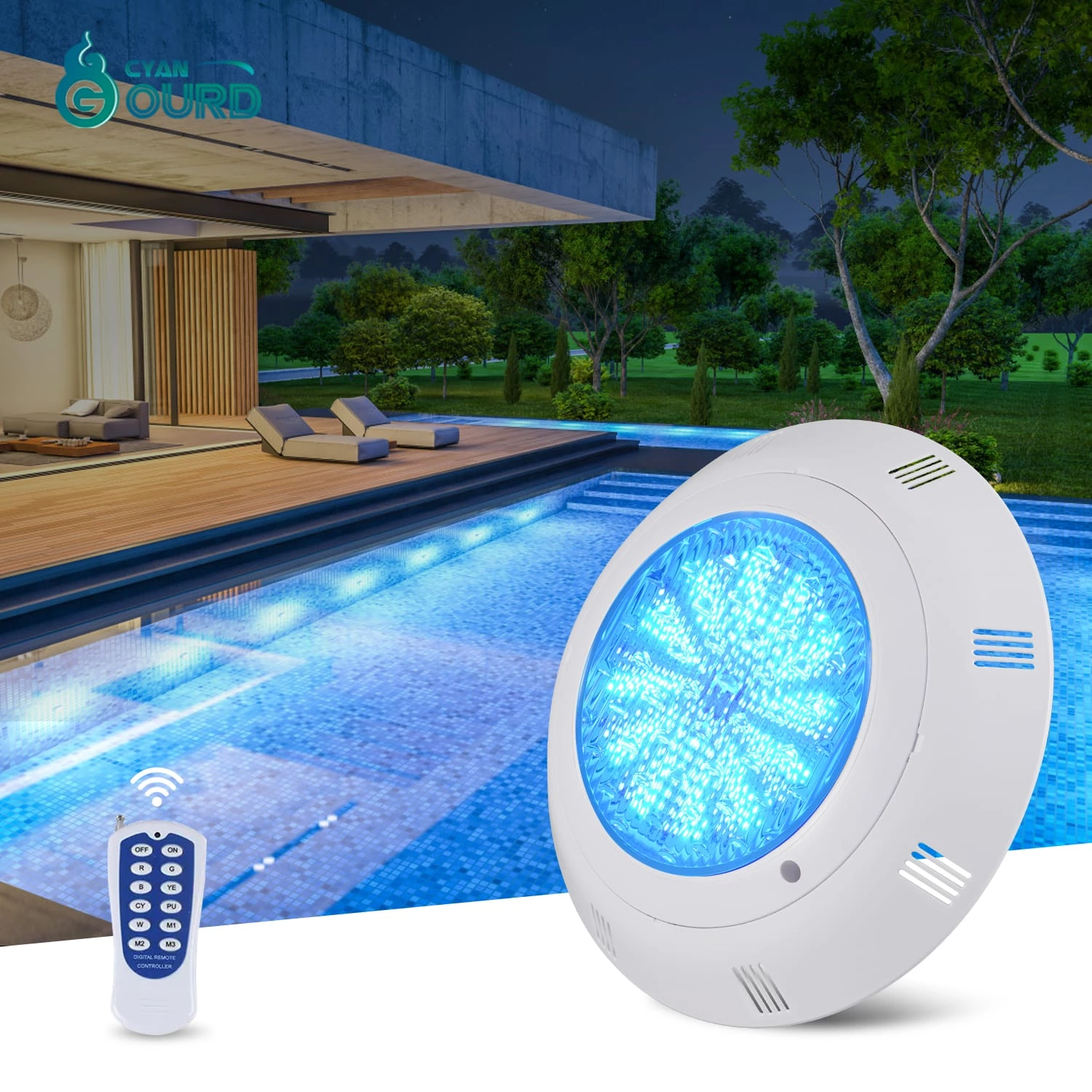
For systems integrators, native compatibility is mandatory. We provide hardware interfaces that support 0-10V dimming and DALI protocols, allowing for seamless integration with BACnet or Modbus gateways. By utilizing a dedicated Led Pool Light controller, facilities can unify their aquatic lighting with broader HVAC and energy management systems.
6. Compliance and Safety Standards
All industrial aquatic hardware must adhere to the CE Marking guidelines and EN 60598 requirements for luminaire safety. We ensure that our Nicheless Pool Light series is tested for isolation integrity, ensuring that if a driver module fails, no hazardous current is fed back into the BAS bus.
7. Future-Proofing Aquatic Infrastructure
Scalability is achieved through decentralized modular control. By selecting components with standard protocol support, facility managers avoid vendor lock-in. Our manufacturing processes focus on interchangeable components, ensuring that maintenance cycles do not require full-system overhauls.
| Feature | Industrial Grade | Consumer Grade |
|---|---|---|
| EMI/EMC Shielding | High (IEC Compliant) | Minimal/None |
| Protocol Support | BACnet, DALI, 0-10V | WiFi/Bluetooth Proprietary |
| Thermal Stability | Tested to 1000hr+ High Humidity | Standard Indoor Range |
Need Integration Guidance?
Download our full technical specifications and consult with our engineering team for your next aquatic facility project.
Request Integration ConsultationFrequently Asked Questions
Q: Which communication protocols are best for pool lighting?
A: For industrial BAS environments, DALI and 0-10V protocols are considered most stable. BACnet/IP or MS/TP gateways can then translate these to your primary building management system.
Q: How do pool light drivers interface with industrial controllers?
A: Through secondary relay or dimming interface modules that accept industrial standard voltage signals, isolating the high-power lighting loop from the low-voltage logic controller.
Q: What are the grounding requirements for pool lighting?
A: You must ensure a common grounding reference point across all control modules and use shielded twisted-pair cabling for all signal lines to prevent induced loop noise.
Q: Does PWM dimming cause flickering in BAS systems?
A: It can if the PWM frequency is incompatible with the BAS sampling rate or if there is excessive signal noise; using EMI-filtered drivers resolves this issue.
Q: How do I handle signal attenuation over long cable runs?
A: Use signal repeaters and ensure your cabling impedance matches the requirements of your control interface to minimize power drop-off.