Русский
 Français
 بالعربية
 Español
Optimizing Commercial Aquatic Lighting Infrastructure: An Engineering Guide
Commercial aquatic lighting infrastructure design: Ensuring long-term operational success in commercial natatoriums requires moving beyond residential-grade standards. By prioritizing hermetic resin-potting, 316L stainless steel material integrity, and DALI/DMX-ready BMS integration, engineers can minimize failure rates caused by chemical corrosion and moisture ingress while maintaining strict compliance with international safety protocols.
The Engineering Crisis in Public Aquatics
Commercial natatoriums represent some of the most aggressive environments for electrical infrastructure. The common practice of using consumer-grade ABS luminaires in municipal projects often leads to premature failures. These failures are primarily driven by two factors: osmotic moisture ingress through inferior cable glands and chemical degradation of polymer housings in high-chlorine water. For the MEP consultant, this manifests as an untenable cycle of maintenance costs and pool downtime. Professional infrastructure requires hardware designed for sub-atmospheric and high-pressure service rather than decorative residential aesthetics.
Material Science for High-Chlorine Environments
In our production line, we have identified that standard IP68 certification is often misinterpreted as a panacea for aquatic longevity. While an IP68 rating confirms protection against continuous immersion, it does not account for the chemical aggression of commercial pool sanitation systems. To combat this, we utilize a proprietary hermetic resin-potting process. Unlike air-filled voids, our resin-filled housings eliminate the possibility of condensation build-up—the leading cause of LED driver failure.
For high-end infrastructure, material selection is critical. We prioritize 316L stainless steel over standard marine-grade alloys to provide superior resistance against pitting in salt-water and high-chlorine pools. For instance, our YC105/165/205-SP stainless steel series is specifically engineered for these high-stress environments, ensuring that the structural integrity of the housing matches the expected 10-year+ service life of the LED array.
Photometric Integrity & Beam Optimization
Competition-grade aquatics require more than simple illumination; they require high-fidelity photometric performance. Our internal testing lab adheres to L80/L90 lumen maintenance benchmarks, ensuring that light output does not degrade below 80% or 90% of initial intensity over 50,000+ operating hours. This is essential for maintaining consistent light levels for high-speed underwater telemetry and competition camera systems used in professional swim meets. By optimizing beam angles, we ensure deep-water penetration without creating high-glare zones that obstruct referee or camera visibility.
Control System Integration
Integrating legacy hardware with modern Building Management Systems (BMS) remains a significant challenge. Our driver architecture is designed for flicker-free operation, which is mandatory for environments requiring high-speed synchronization. We support standard DMX/DALI protocols to allow for seamless dimming control and zone management. Proper integration involves understanding that aquatic lighting systems require signal repeaters if cable runs between the power supply and the light exceed 50 meters, a common oversight in large-scale natatorium design.
Testing, Compliance, and Longevity
Authority in aquatic infrastructure is established through rigorous validation. We align our manufacturing with IEC 60598-2-18 standards, which specifically address the requirements for luminaires in swimming pools. Our internal QC protocols include:
- Salt-mist testing conducted in accordance with ASTM B117 to simulate extreme corrosion scenarios.
- Hyperbaric pressure testing to verify seal integrity beyond standard 3-meter depth requirements.
- Electromagnetic interference (EMI) shielding verification to prevent noise interference with BMS controls.
For compact, nicheless installations, the QR-55 series showcases how we apply these standards to smaller form factors. Featuring dimensions of φ55*H110mm, it allows for surface-mount flexibility while maintaining the same chemical-resistant engineering principles found in our larger stainless steel models.
| Feature | Consumer-Grade Hardware | Industrial Commercial-Grade |
|---|---|---|
| Housing Material | Standard ABS/Polymer | 316L Stainless Steel |
| Sealing Method | O-ring Gaskets | Hermetic Resin-Potting |
| Control Protocol | Non-dimmable/On-Off | BMS-Ready DALI/DMX |
| Lumen Maintenance | Not Specified (L70 unverified) | L90 Certified |
Total Cost of Ownership Analysis
While industrial-grade hardware requires a higher initial capital expenditure, the TCO model proves it is the superior choice for public facilities. Standard consumer hardware in commercial settings typically requires full replacement every 2 to 3 years due to seal failure. By contrast, our resin-potted, 316L stainless steel units significantly extend the maintenance cycle, reducing operational expenses and labor costs by over 60% across a 10-year lifecycle.
Frequently Asked Questions
Q: How does resin-potting improve luminaire longevity?
A: Resin-potting removes all air pockets within the light housing. By eliminating these voids, we prevent condensation and block moisture ingress, which are the primary drivers of internal component corrosion in underwater fixtures.
Q: What is the significance of IEC 60598-2-18 compliance?
A: This international standard sets the safety and operational requirements specifically for swimming pool luminaires, ensuring electrical isolation and mechanical robustness for underwater use.
Q: Can your fixtures connect directly to my existing BMS?
A: Our drivers support industry-standard DALI and DMX protocols, allowing for integration with most BMS platforms that support these communication interfaces.
Q: Why is 316L stainless steel preferred over other materials?
A: 316L offers superior resistance to chemical attack, specifically against chlorine and salt, preventing the surface pitting and degradation that often affects lower-grade stainless or polymer housings.
Q: How do I ensure lighting remains flicker-free for cameras?
A: Flicker is usually caused by incompatible dimming signals. Our systems use high-frequency PWM dimming drivers specifically tuned to maintain stable output even when interface signals are processed by third-party BMS controllers.
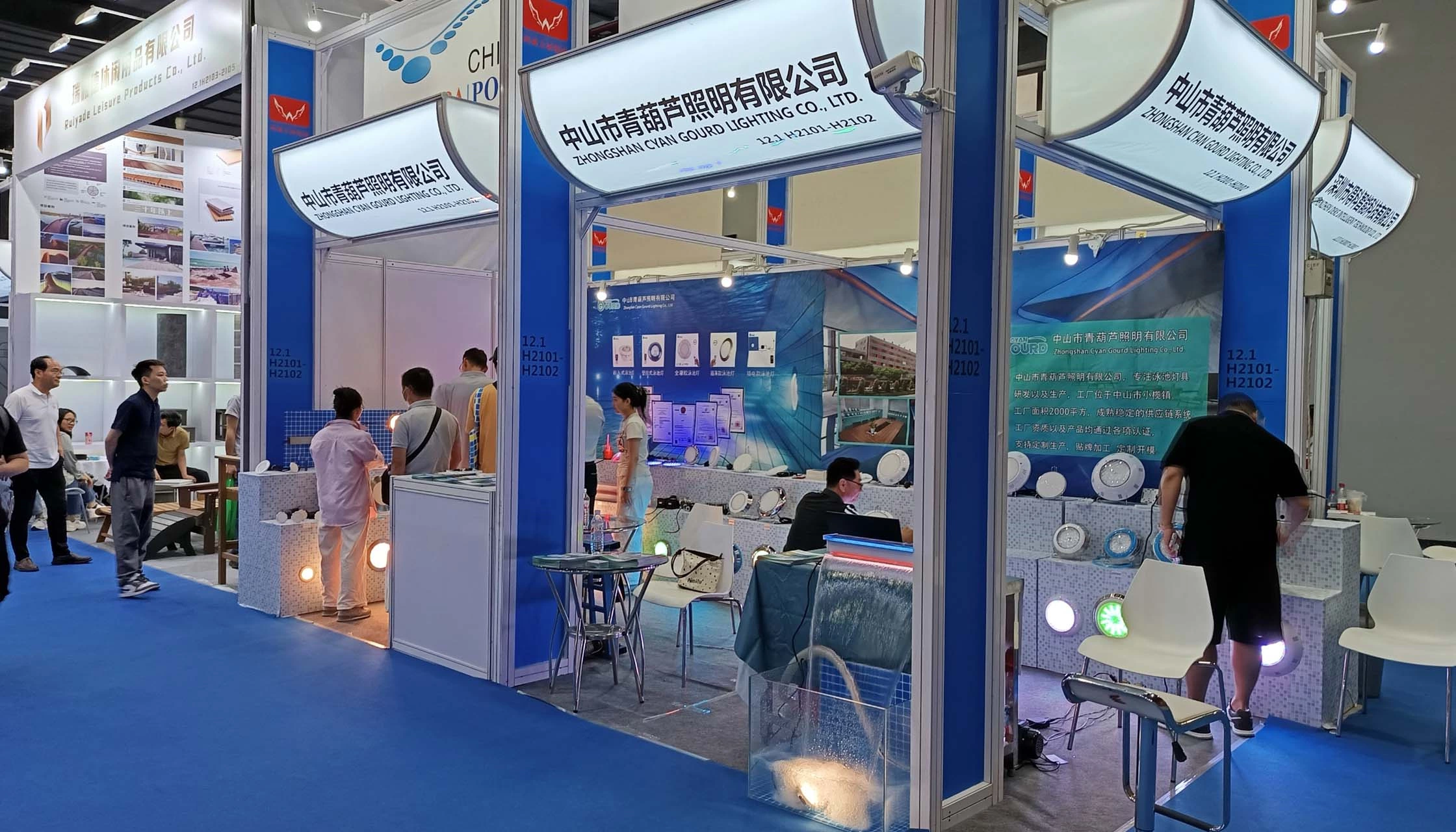
Explore Our Factory Capabilities
Download our comprehensive technical guide for commercial aquatic infrastructure and speak with our engineering team about your next project specifications.
Download Technical Whitepaper