Русский
 Français
 بالعربية
 Español
Engineering Specifications for Nicheless Pool Light Mounting in Concrete Environments
Nicheless pool light mounting engineering specifications: Successful integration of nicheless luminaires requires precise conduit-to-bracket alignment, strict adherence to NEC Article 680 grounding protocols, and materials capable of withstanding the hydraulic and thermal stresses inherent in monolithic concrete pool structures.
The Shift from Niche to Nicheless: Structural and Economic Impacts
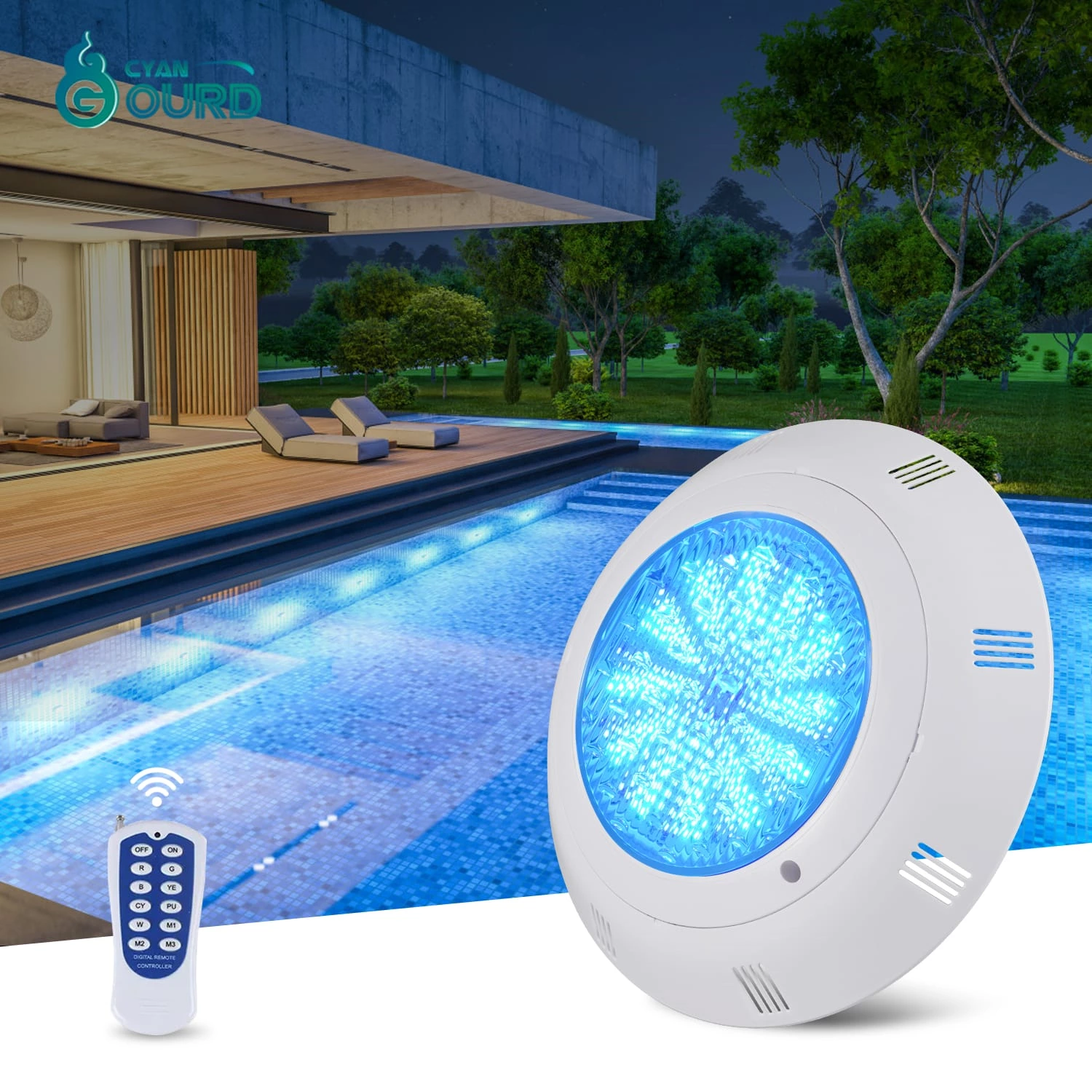
Traditional recessed lighting niches often act as structural weak points in concrete shells, requiring significant rebar displacement and creating potential leak paths. Transitioning to nicheless technology, such as our QR-55 model, allows for a surface-mounted architecture that minimizes concrete disturbance. By eliminating the large cavity, project managers can ensure the monolithic integrity of the pool wall while reducing the labor costs associated with complex forming and waterproofing around recessed canisters.
Engineering Requirements for Conduit Interfacing
The interface between the conduit and the mounting bracket is the most critical failure point in high-density concrete installations. We recommend rigid PVC or stainless steel conduit paths that terminate directly into the bracket base, verified for hydrostatic seal integrity. For the QR-55 series, with its compact dimensions of phi 55mm by H110mm, the conduit must be flush-seated to prevent water migration behind the luminaire housing. Proper sealing protocols must strictly follow the IEC 60529 (IP68) standard, ensuring ingress protection even under sustained immersion.
Managing Thermal Expansion and Heat Dissipation
High-density concrete acts as an insulator, which can lead to localized thermal buildup. Our engineering design for the QR-55 utilizes a high-conductivity polymer/stainless steel hybrid construction to dissipate thermal energy from the SMD 3535 LED module. By maintaining a controlled surface temperature, we prevent micro-fracturing of the surrounding concrete due to differential thermal expansion. In our production line, we subject these units to rigorous continuous thermal cycling to ensure the material integrity remains stable across extreme temperature fluctuations.
Electrical Safety and NEC Article 680 Compliance
Compliance with NEC Article 680 is non-negotiable for commercial pool safety. Nicheless units must be bonded as part of the pool equipment grounding system. Our hardware includes dedicated bonding lugs that ensure a low-impedance path to the pool bonding grid, mitigating the risk of stray voltage. Contractors must verify that all low-voltage runs are separated from line-voltage conductors as dictated by the safety mandates for submerged pool luminaires.
Installation Best Practices for Structural Integrity
Always mandate a professional site inspection before mounting to ensure the concrete density and reinforcement pattern support the drilling and anchoring of the QR-55 brackets. Do not exceed manufacturer-specified torque values on mounting hardware, as over-tightening can compromise the waterproof seal. Our quality control team emphasizes that the use of high-grade marine sealants is essential during the final fastening stage to ensure a hermetic barrier against pool chemicals and alkaline concrete environments.
| Specification | QR-55 Performance Metric |
|---|---|
| Housing Material | ABS + PC Transparent Cover |
| Power Consumption | 3W / 6W / 9W Options |
| Ingress Protection | IP68 Tested |
| Thermal Management | Passive SMD 3535 Heat Dissipation |
Quality Assurance: Reviewing ALT and Salt Spray Data
Our commitment to longevity is backed by Accelerated Life Testing (ALT). Our SMD 3535 modules maintain 90% lumen maintenance after 5,000 hours of continuous thermal cycling. Furthermore, all exposed metal hardware undergoes ASTM B117 salt spray testing for 1,000 hours, ensuring resistance to corrosion in harsh pool environments. These metrics are available in our full compliance documentation to assist engineers in meeting strict municipal project standards.
Frequently Asked Questions
Q: What is the required conduit size for nicheless light cable management?
A: Most commercial installations require 3/4-inch or 1-inch rigid PVC conduit to allow for cable pull and future servicing of the unit.
Q: How does thermal dissipation affect concrete wall integrity?
A: Efficient heat management prevents the luminaire from heating the surrounding concrete to temperatures that could cause expansion-related cracks in the pool shell.
Q: Can I use standard adhesives for retrofitting nicheless lights?
A: Only manufacturer-approved marine-grade, submersible epoxies should be used; ensure they are compatible with both the pool finish and the luminaire housing material.
Q: How does the QR-55 account for varying pool wall thickness?
A: The QR-55 utilizes a flexible surface-mount bracket system that accommodates various surface textures and wall thicknesses without requiring structural depth behind the wall.
Q: What does IP68 rating mean for your nicheless lights?
A: IP68 certifies that the unit is dust-tight and capable of continuous immersion in water under conditions specified by the manufacturer, typically tested up to 2 meters of depth.
Download Technical Spec Sheet & Compliance Documentation
Access our complete engineering files, including ALT results and NEC compliance checklists for your next project.
Download Technical Guide