Русский
 Français
 بالعربية
 Español
Engineering Benefits of Nicheless Pool Lights for Modern Construction
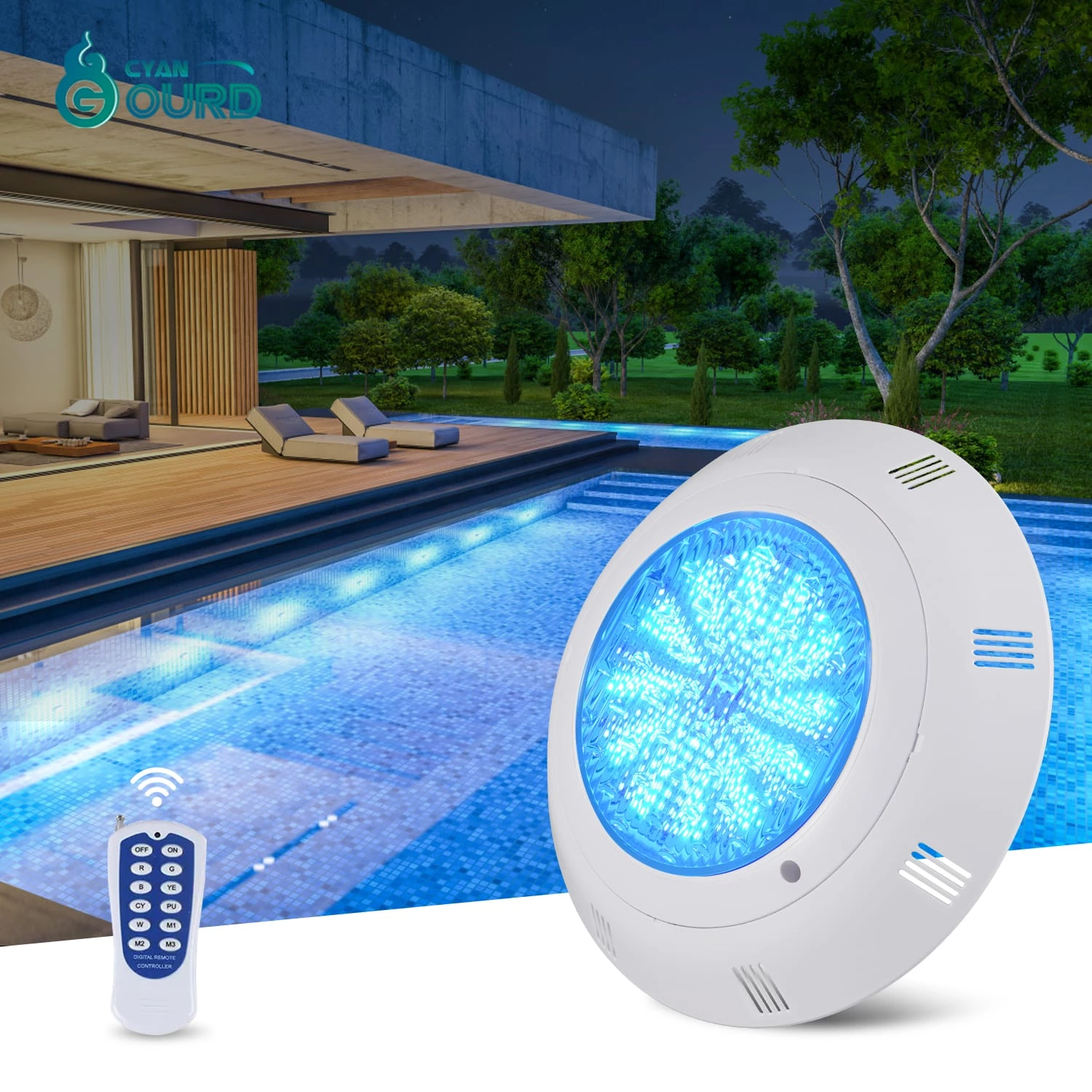
Nicheless pool lighting engineering benefits: Nicheless architectures streamline commercial aquatic design by removing bulky wall cavities, thereby reducing structural leak risks. Advanced thermal dissipation and factory-verified cable gland integrity ensure these low-profile luminaires meet rigorous commercial reliability standards for high-end hospitality and municipal projects.
The Shift Toward Nicheless Architecture: Reducing Structural Complexity
Modern commercial pool construction is trending toward cleaner, more minimalist designs. Traditional niche-based lighting requires large block-outs in concrete walls, which creates potential weak points for structural cracking and water infiltration. By adopting Nicheless Pool Light systems, project managers can simplify the rebar and concrete pour processes. Removing the need for a housing niche reduces the required wall thickness variance and eliminates the primary cavity where debris and algae accumulation typically occur. As discussed in Nicheless Vs Inground Pool Light studies, the mechanical elimination of the niche drastically improves the monolithic integrity of the pool structure.
Engineering Out the Risk: Thermal Management as a Survival Metric
The primary challenge for any underwater LED luminaire is heat dissipation. Without a metal niche to act as a heat sink, the Led Pool Light must rely on passive thermal conduction through the fixture body. In our production line, we utilize a specialized thermally conductive polymer and passivated stainless steel housing that channels heat directly into the surrounding water. If thermal management fails, LED junction temperatures exceed safe operating limits, leading to premature lumen depreciation or circuit board delamination. Similar to the design principles seen in our Stainless Steel Pool Light models, we prioritize high-conductivity materials to maintain thermal equilibrium even in high-ambient-temperature environments.
The Physics of Seal Integrity: Why Cable Glands Matter in Nicheless Systems
In a nicheless setup, the cable entry point is the most common failure vector for water ingress. We employ Environmental Stress Screening (ESS) documentation to verify the integrity of every cable gland before shipment. During these stress tests, each unit is subjected to sustained pressure equivalent to 5 meters of depth while undergoing thermal cycling between 5C and 50C. Our manufacturing process includes automated pressure decay testing, which identifies microscopic leaks in the gland seal. Like our Resin Filled Pool Light product line, we ensure that the ingress protection reaches the IEC IP68 certification standard to prevent electrochemical corrosion of internal wiring.
Structural Compatibility: Navigating Liner Thickness and Concrete Finishes
Nicheless fixtures are not universally compatible; they require specific structural conduit diameters to accommodate the cable sealing mechanism. For installations utilizing vinyl liners, special compression gaskets are required to maintain a flush finish against the wall. When working with shotcrete or poured concrete, conduit positioning must be precise to within 2mm to ensure the light mounting plate sits perfectly flat. We have observed that failures in the field often result from improper conduit preparation rather than the luminaire itself. As noted in our Engineering Installing Nicheless Underwater Pool guide, standardizing the conduit interface at the design phase is critical for long-term project success.
Compliance and Testing: Meeting NEC Article 680 and UL 676 Standards
Commercial installations must adhere to NEC Article 680 for underwater luminaires. Our nicheless models are designed and tested according to UL 676, which ensures that low-voltage circuits are properly isolated and protected against short circuits in a wet environment. Every production batch of our Ultra Thin Pool Light undergoes a series of dielectric withstand tests to guarantee electrical isolation between the LED array and the stainless steel housing, keeping failure rates (PPM) at less than 0.1% across our high-volume lines.
| Feature | Standard Niche | Nicheless Engineering |
|---|---|---|
| Wall Penetration | Large block-out required | Minimal 1-inch conduit |
| Thermal Path | Air gap in niche | Direct water contact |
| Seal Reliability | Variable based on niche | Factory ESS tested |
| Installation Time | High complexity | Reduced labor |
Optimize Your Next Project
Request our comprehensive technical spec sheet and access our latest lab data to ensure your design meets all safety requirements.
Download Engineering Lab DataThe Long-Term ROI: Installation Speed vs. Maintenance Accessibility
While nicheless systems reduce initial installation time by approximately 30% due to simplified concrete formwork, B2B buyers must weigh this against maintenance accessibility. Unlike traditional systems where you pull the whole light and niche, nicheless designs focus on modularity. For example, our model JM30356, a glass-based fixture with dimensions of Ø30 x H100 CM, represents our dedication to structural precision. By choosing high-grade, passivated stainless steel, we minimize corrosion risk, extending the service life between necessary interventions. Our engineering team emphasizes that maintenance is not eliminated; rather, it is simplified through standardized modular components that allow for faster component replacement without structural wall repair.
Technical Specifications: Why Precision Manufacturing Defines Reliability
Manufacturing excellence involves tight tolerances that most mass-produced lighting ignores. Our facility utilizes CNC machining for light housings to ensure that gasket surfaces maintain a flatness tolerance within 0.05mm. This precision is essential for long-term water-tightness. Additionally, our Embedded Pool Light series is calibrated to maintain uniform chromaticity consistency across all units, which is a common pain point in large-scale hospitality projects. When reviewing our catalog, note that we specify material grades, such as high-grade 316 stainless steel, to prevent electrochemical degradation in aggressive water environments.
Frequently Asked Questions
Q: How does the nicheless mounting mechanism affect waterproofing compared to traditional systems?
A: Nicheless systems replace the large niche box with a sealed conduit interface, which significantly reduces the number of potential leak points and simplifies the waterproofing membrane application around the fixture.
Q: Do nicheless lights work on all pool wall thicknesses?
A: No, nicheless fixtures require specific conduit structural support; installations must be engineered to match the lighting mounting plate specifications to ensure a flush, secure fit against the pool wall.
Q: What thermal management techniques are used in nicheless LED fixtures?
A: These lights utilize high-thermal-conductivity materials that channel heat from the LED junction directly into the pool water, relying on the water as a heat sink to extend the lifespan of the electronics.
Q: Are nicheless pool lights considered zero maintenance?
A: No, they are not zero maintenance. While they simplify the installation process, the sealing integrity of the cable gland and fixture housing must be verified periodically to ensure long-term structural and electrical reliability.
Q: What certification should I look for when selecting commercial pool lights?
A: You should prioritize luminaires that meet UL 676 standards for underwater safety and carry an IP68 ingress protection rating confirmed through documented environmental stress screening.
Ready to select the right lighting for your project?
Contact our engineering team to review technical specifications or compare our model range against your project requirements.
Request a Consultation