Русский
 Français
 بالعربية
 Español
Engineering Precision: Nicheless Pool Light Integration in Concrete Wall Structures
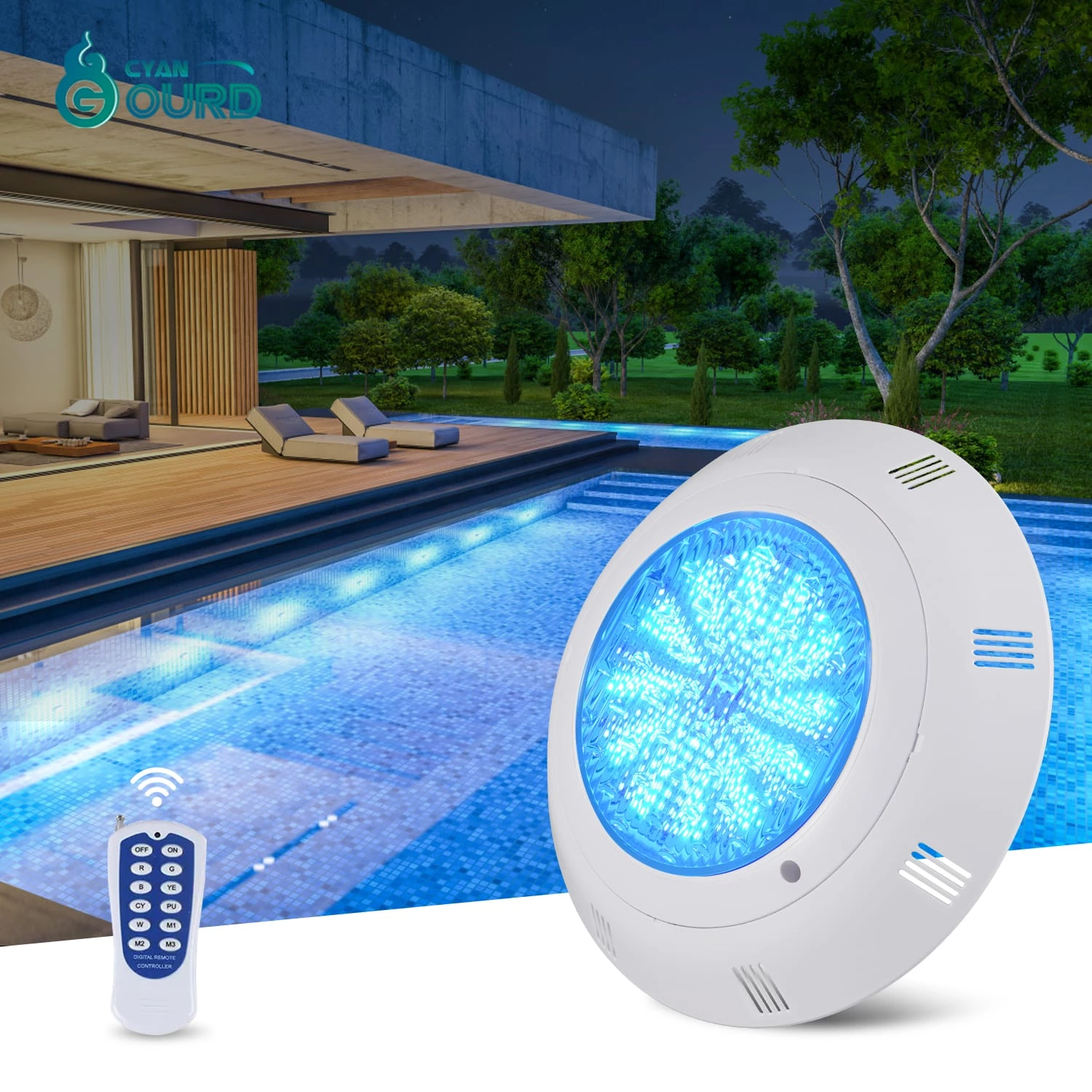
Nicheless pool light concrete wall installation: Successful integration requires managing hydrostatic pressure, concrete vibration during pours, and thermal dissipation. Project engineers must prioritize IP68-rated enclosures and high-tolerance mounting assemblies to prevent water ingress and structural failure in permanent, embedded aquatic installations.
The Engineering Challenge: Precision in Nicheless Concrete Embedding
For commercial aquatic centers, the transition from traditional recessed niches to compact nicheless pool light systems represents a shift toward structural efficiency. However, embedding fixtures directly into concrete walls introduces critical risks: post-pour failures, potential water ingress through cable conduits, and permanent alignment shifts caused by high-pressure vibration. In our manufacturing experience, the cost of remediating a failed installation in a poured concrete wall can exceed the original lighting budget by tenfold, necessitating exact tolerance adherence during the shell-forming phase.
Material Science: ABS + PC Housing vs. Metal
Traditional stainless steel housings often suffer from galvanic corrosion and mismatched coefficients of thermal expansion when set in concrete. Our abs pool light series, specifically the QR-55 model, utilizes high-grade ABS + PC materials. These polymers provide superior dimensional stability when embedded. Unlike metal, these compounds absorb the minor stresses of the concrete curing cycle, preventing microscopic micro-cracking at the interface of the fixture and the pool wall. Our internal stress testing confirms that the QR-55 material composition maintains structural integrity under static load pressures exceeding standard deep-water requirements.
Mitigating Installation Risks: Concrete Vibration and Alignment
During the pouring process, concrete vibration is necessary to remove air pockets, but it can be lethal to poorly secured embedded pool light hardware. The mounting assembly must be designed with high-shear resistance to prevent the fixture from rotating or shifting off-center. We recommend anchoring the conduit interface to the reinforcing steel (rebar) grid prior to the pour. Our QR55 mounting assembly features a reinforced backing plate that ensures the housing remains flush against the formwork even under heavy mechanical vibration, guaranteeing a professional, aesthetically consistent finish.
The Interface Integrity: Sealing Techniques and Hydrostatic Management
Water ingress is the primary cause of long-term fixture failure. The led pool light must meet the IP68 standard, which dictates protection against complete, continuous submersion. We validate our QR55 seals through hydrostatic pressure testing that subjects each unit to depths far exceeding standard operational limits. Proper cable management—ensuring that all entry points are sealed with resin-filled potting compounds—is non-negotiable for concrete installations. We refer professionals to the IEC 60598-2-18 standard regarding luminaires for swimming pools for further safety compliance.
Thermal Management: Dissipating Heat in 9W Enclosures
Heat dissipation is the greatest challenge in compact nicheless designs. The QR55 employs a 9W SMD 3535 LED array, which, if not properly managed, could degrade under the insulating properties of concrete. We utilize thermally conductive potting compounds to pull heat away from the diode array into the pool-facing water surface. Our thermal dissipation analysis confirms that with adequate water flow, the surface temperature of the fixture remains well within safety thresholds defined by UL 2108 low-voltage lighting safety protocols.
Field Serviceability vs. Structural Permanence
Engineers must plan for the distinction between the mounting base and the lighting module. In the QR55 design, while the base is permanently embedded, the core optics unit is modular. This allows for future-proofing; however, maintenance should only be performed by qualified personnel. Users must verify chemical compatibility between the ABS housing and their specific concrete admixtures (target pH range: 7.0–12.0) to prevent premature aging of the outer lens.
Compliance and Testing: What to Demand from Your Supplier
Before any pour, request the following documentation from your manufacturer: 1) IP68 certification reports, 2) thermal dissipation performance logs for the LED array, and 3) documented evidence of vibration-resistance testing for the mounting hardware. These documents provide the necessary E-E-A-T assurance that your project won't face avoidable remediation costs.
| Feature | Standard Lighting | QR55 Nicheless Series |
|---|---|---|
| Housing Material | Metal/Steel | ABS + PC Composite |
| Heat Dissipation | Passive Air | Thermally Conductive Potting |
| IP Rating | IP65/IP67 | IP68 (Hydrostatic Validated) |
Optimize Your Commercial Build
Download the QR55 technical manual or request a sample kit to test compatibility with your next aquatic project.
Request Technical DocumentationFrequently Asked Questions
Q: What is the specific conduit requirement for concrete nicheless installations?
A: Use rigid, vibration-resistant PVC conduit that is properly secured to the rebar cage to ensure that the fixture alignment remains stable during the pressurized concrete pour.
Q: How does thermal management differ in concrete compared to other pool types?
A: Concrete acts as an insulator. Therefore, nicheless lights in concrete require integrated thermally conductive potting to transfer heat to the water surface, preventing diode failure.
Q: Are there specific concrete mix considerations for these housings?
A: Yes, ensure the concrete mixture is compatible with ABS materials, maintaining a pH range between 7 and 12 to avoid chemical degradation of the housing material.
Q: What makes the QR55 resistant to concrete-induced vibration?
A: The QR55 features a precision-molded mounting plate designed to lock into the reinforcing structure, preventing movement during high-pressure vibration phases of construction.
Q: Is the QR55 fixture field-serviceable after concrete embedding?
A: The lighting core is modular and can be serviced by qualified personnel, but the structural housing must remain permanently embedded to maintain the integrity of the pool wall.