Русский
 Français
 بالعربية
 Español
Smart Lighting: Integrating Remote Control Modules into Commercial Pool Infrastructure
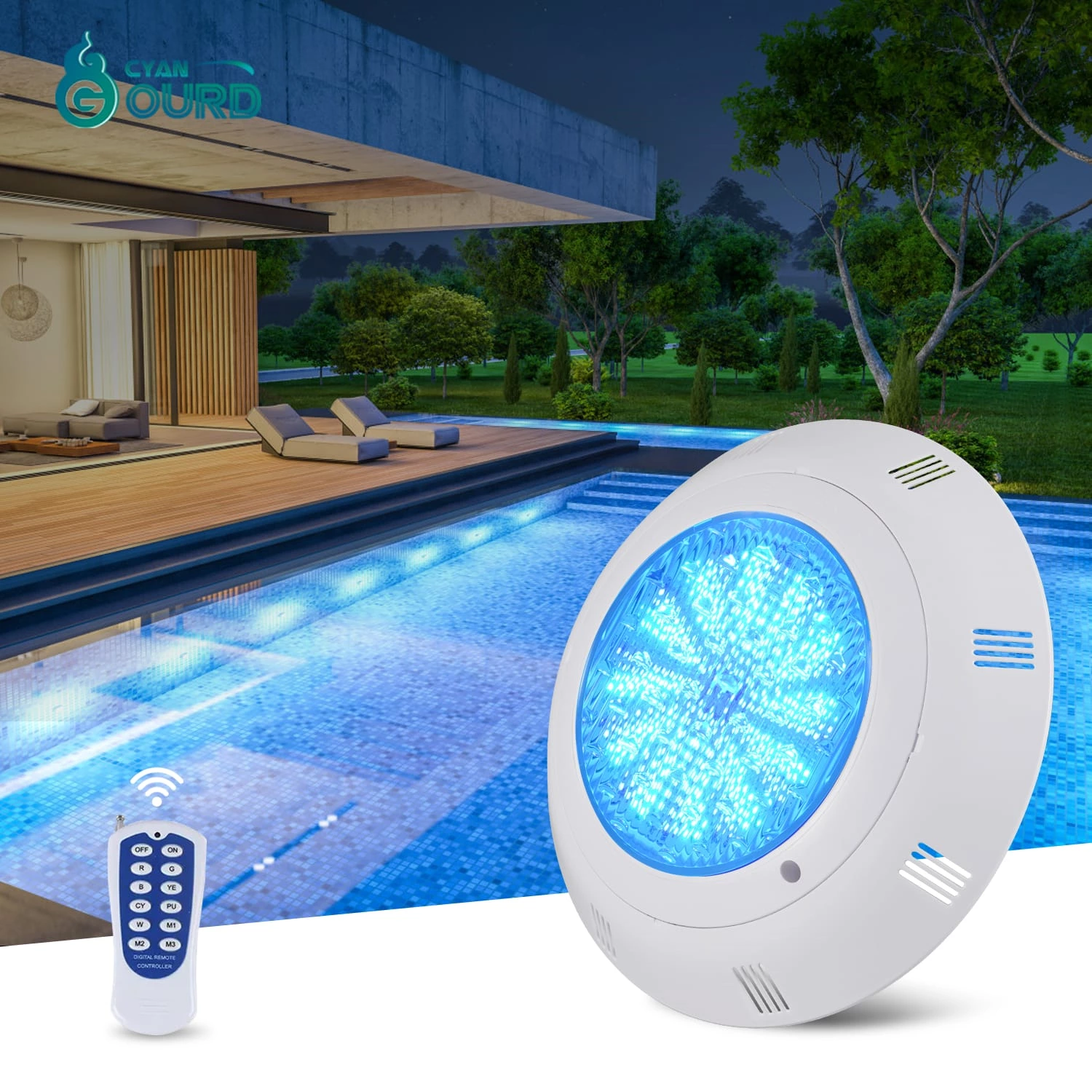
Integrating remote control modules into commercial pool lighting: Successful integration requires factory-sealed IP68 housings, precise thermal dissipation protocols, and robust PCB conformal coating to prevent electronic failure in chlorine-rich environments. Procurement teams must prioritize units meeting UL 676 safety compliance to ensure long-term reliability in large-scale aquatic installations.
The Reliability Gap in Commercial Pool Automation
Commercial aquatic facilities demand infrastructure that far exceeds the performance of residential systems. While consumer-grade remote modules rely on standard wireless protocols, they often fail under the specific stressors of deep-water installations, including high humidity and electromagnetic interference. In our manufacturing experience, we have observed that premature failure in commercial pools is almost exclusively linked to moisture ingress at connector points and thermal runaway in poorly ventilated control housings. Reliable automation for MEP engineers requires moving away from modular, field-wired components toward integrated, factory-sealed systems designed for industrial longevity.
Engineering for Signal Integrity
Achieving stable remote connectivity in a pool environment involves navigating water attenuation and signal reflection. Water is a significant barrier to electromagnetic waves. To optimize signal reliability, antenna placement is critical. Our engineering team utilizes custom signal attenuation mapping to determine the most effective installation depths, ensuring that wireless control modules maintain a stable connection through reinforced concrete pool walls. We do not claim 100% signal penetration without caveat; instead, we provide localized antenna placement diagrams that account for specific site variables.
Thermal Management & Module Lifespan
Integration of remote modules adds a heat-generating element to the LED assembly. Without proper thermal management, the driver lifespan is severely compromised. Our factory-tested protocol uses IP68-rated cast aluminum housings as active heat sinks. For comparison, our JM30377-5 series demonstrates how hardware-focused thermal management sustains internal components; while this specific model is for indoor use, the same principles of chassis heat dissipation are applied to our aquatic remote modules to ensure they operate well within the thermal limits of the LED driver, preventing premature degradation.
Manufacturing Standards: PCBA Protection
In chlorine-rich environments, circuit board corrosion is an unavoidable threat. We employ a specialized PCB conformal coating process for every control module. Unlike spray-on applications, our factory-integrated vacuum coating ensures total coverage of high-density electronic components. This layer prevents salt and moisture-induced conductive paths from forming. We maintain strict QC checkpoints, including microscope-level inspection of the coating thickness to ensure uniformity.
Build vs. Buy: Factory-Sealed vs. Field-Replacable
Field-serviceability is often requested, but in high-pressure submersions, any field-serviceable port is a potential point of failure. We recommend factory-sealed units for commercial installations to maintain IEC 60529 (IP68) integrity. Our modules are pressure-tested to ensure water-tightness; unless the unit design specifies a pressure-tested, factory-provided seal replacement kit, we treat all remote-controlled luminaires as permanent factory assemblies to mitigate the risk of maintenance-related ingress.
Compliance Framework
Compliance is the baseline for safety in public aquatic facilities. All integrated systems must meet UL 676 safety standards for underwater luminaires. By adhering to these guidelines, we ensure that the electrical isolation between the high-voltage pool power and the control module remains secure. Our testing covers electrical continuity, leakage currents, and thermal performance at depth.
Partnering for Performance
Operational downtime is expensive. Our Environmental Stress Screening (ESS) process tests every batch beyond basic certification. By subjecting assemblies to cyclical temperature and pressure shifts, we identify potential component failures before they leave the factory floor, ensuring the reliability demanded by high-traffic commercial projects.
| Feature | Retail-Grade Module | Factory-Integrated Commercial |
|---|---|---|
| Conformal Coating | Minimal / None | Industrial Vacuum Coating |
| Thermal Management | Passive / Plastic Housing | Active Heat-Sink Cast Housing |
| Ingress Rating | IP65 / Splash Proof | IP68 (Submersible to 5m) |
| Certification | General CE | UL 676 + IEC 60529 |
Need a Technical Engineering Specification?
Download our full ESS testing protocol and commercial design guide to ensure your next pool project meets all safety and reliability standards.
Download Spec SheetFrequently Asked Questions
Q: What is the specific depth rating for these integrated systems?
A: Our commercial grade modules are certified to IP68 standards, which we define through factory testing as submersible to depths of up to 5 meters for sustained periods.
Q: How do remote control modules affect electrical safety in pool lighting?
A: By utilizing UL 676 compliant integration, we ensure that the low-voltage DC lines used for controls are properly isolated from the primary light drivers, preventing feedback or leakage.
Q: Are these modules field-serviceable?
A: No. To maintain IP68 integrity and prevent moisture ingress, these modules are factory-sealed. We discourage field opening to ensure the integrity of the pressure-tested housing.
Q: Which wireless protocol is most stable for large pool installations?
A: For deep-water commercial facilities, low-frequency protocols or mesh networks are preferred as they manage signal attenuation through water and concrete more effectively than standard 2.4GHz consumer protocols.
Q: What testing do you perform on the circuit boards?
A: We conduct Environmental Stress Screening (ESS) that includes thermal cycling and high-humidity salt-spray testing to verify the durability of the conformal coating and component stability.