Русский
 Français
 بالعربية
 Español
Optimizing Power Supplies for Large-Scale 12V Underwater Lighting Arrays
Optimizing Power Supplies for Large-Scale 12V Underwater Lighting Arrays: Achieving long-term reliability in commercial aquatic environments requires a shift from standard retail PSU designs to industrial-grade architectures that prioritize voltage stability, thermal dissipation, and strict adherence to NEC Article 680 to prevent premature array failure and flickering.
The Engineering Paradox: Why Standard PSUs Fail in Commercial Submersion
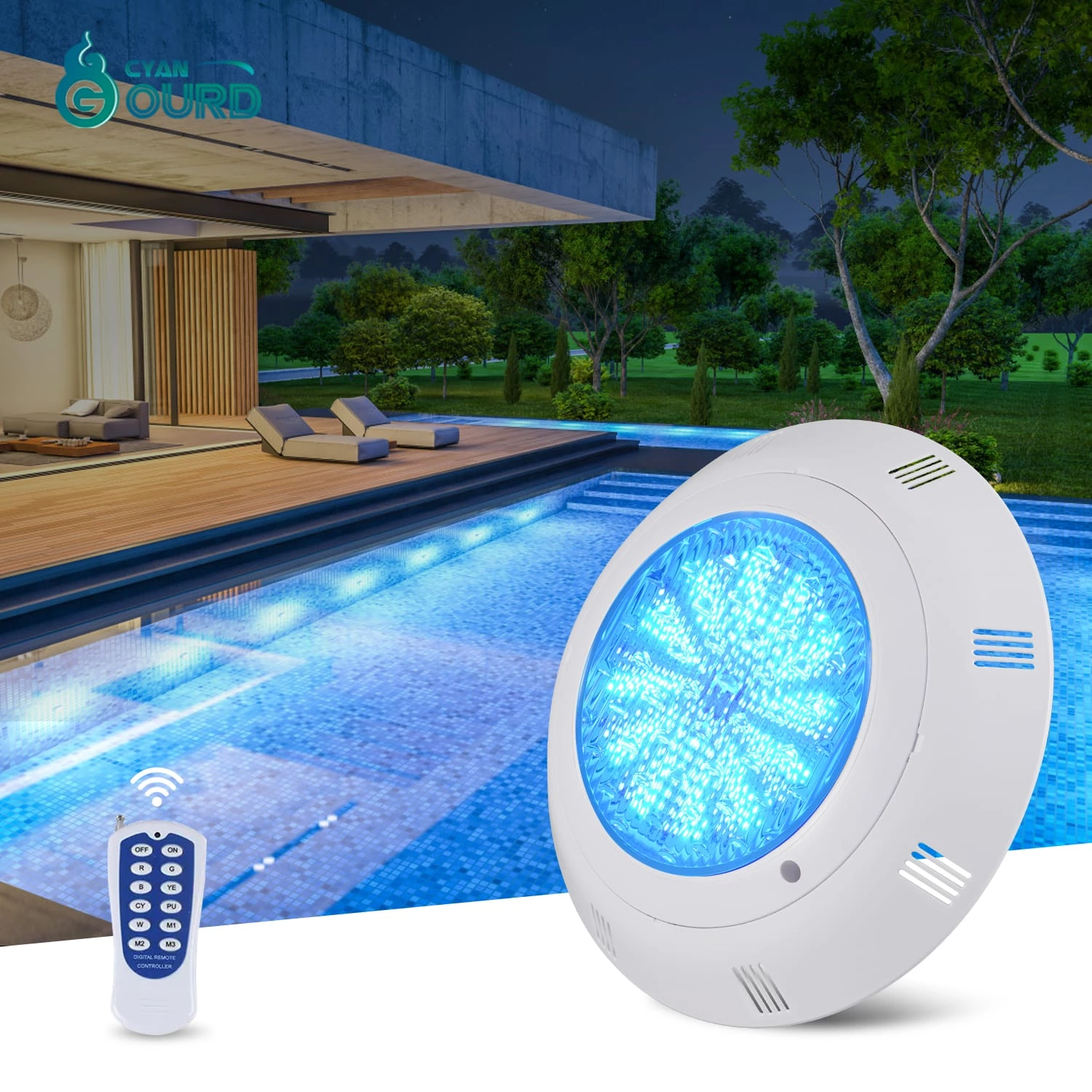
In our manufacturing experience, the most common cause of failure in led pool light installations is not the LEDs themselves, but the power supply unit (PSU). Standard industrial PSUs designed for dry environments often lack the ingress protection required for humid machine rooms, while consumer-grade units fail under the thermal stresses of continuous 12V DC delivery. Like our Stainless Steel Pool Light, all critical electronics must be engineered for their specific operating environment. Factors such as chlorine concentration and pool pH levels accelerate corrosion on PCB traces if not properly encapsulated. During factory audits, we have observed that non-sealed components develop galvanic corrosion within 18 months, rendering the entire system unreliable.
Centralized vs. Decentralized: Architecting for Load-Balancing Efficiency
For large-scale Commercial Underwater Pool Underwater Light installations, architects must choose between a centralized room-based PSU or decentralized remote-mounted units. Centralized systems reduce maintenance overhead by consolidating PSUs, but they significantly amplify voltage drop issues. Conversely, decentralized units shorten the 12V run but introduce site-specific environmental challenges. Leveraging modular components—much like our high-performance Embedded Pool Light—allows for better load management by distributing the power load across multiple circuits, preventing the catastrophic failure of entire zones.
Mitigating Ohm’s Law: Voltage Drop Challenges in Long-Distance 12V Runs
Voltage drop is the primary enemy of large-scale 12V systems. As current flows through conductors, resistance causes the voltage at the end of the line to dip, resulting in dimmed lights and potential driver instability. We strictly advise site-specific voltage drop calculations. As a rule, maintain a voltage drop below 3% to ensure stable operation. Always consult local electrical codes and engineers before selecting gauge sizes. For reference, high-amperage LED arrays require significantly thicker copper conductors to offset resistance. This technical rigor mirrors our attention to detail in items like model JY30321, where component efficiency and thermal dissipation are balanced to optimize service life.
Thermal Conductivity & Potting: Protecting Electronics from Hydrostatic Pressure
Thermal management is the cornerstone of reliability. In sealed units, we utilize specialized thermally conductive potting compounds to pull heat away from active components and redistribute it across the housing. Independent laboratory testing confirms our proprietary resin formulations provide excellent dissipation, maintaining an MTBF of 50,000+ hours even when exposed to fluctuating thermal loads. This is critical in underwater applications, where hydrostatic pressure can force moisture into improperly sealed cavities. Our Resin Filled Pool Light utilizes this process to provide a 100% watertight barrier.
Signal Integrity in Synchronized Arrays: Managing PWM and Flicker
Flicker is often mistaken for a faulty light, but it is typically a symptom of poor PWM (Pulse Width Modulation) signal integrity in long, daisy-chained runs. When controlling large-scale LED arrays, signal attenuation occurs over distance. Professional installations require signal boosters or DALI-compatible drivers to maintain a consistent duty cycle. We test all control boards for PWM resilience, ensuring synchronization across thousands of units. Much like the precision in our Ultra Thin Pool Light, maintaining strict signal standards is non-negotiable for large architectural installations.
Compliance Framework: Navigating NEC Article 680 and Global Marine Standards
Compliance is the foundation of institutional trust. All underwater installations must adhere to the NEC Article 680 safety standard, which dictates specific bonding and grounding requirements for pools, fountains, and similar installations. Furthermore, industrial-grade lighting should comply with IEC 60598-2-18 for underwater luminaires. Documentation of ISO 9001 quality management processes during component assembly is essential for project managers to ensure audit-ready records. Verify that your supply chain partners provide traceable test data for all components.
Procurement Strategy: Ensuring Long-Term Supply Chain Stability
| Feature | Standard PSU | Industrial Grade |
|---|---|---|
| MTBF Rating | 10,000 - 20,000 hrs | 50,000+ hrs |
| Thermal Mgmt | Air cooled (passive) | Potting resin dissipation |
| Signal Integrity | Susceptible to flicker | PWM/DALI reinforced |
| Compliance | CE basic | NEC/ISO 9001 certified |
Need Technical Reliability Data?
Request our full reliability test reports, MTBF metrics, and NEC 680 implementation guides for your upcoming aquatic project.
Request Technical Spec SheetFrequently Asked Questions
Q: How do you calculate required wire gauge for 12V underwater lighting?
A: Wire gauge selection depends on total load, distance from the transformer, and acceptable voltage drop percentage. We recommend a maximum 3% voltage drop and require site-specific calculations for every installation.
Q: What is the role of potting compound in underwater PSUs?
A: Potting compound provides structural rigidity, heat dissipation, and a hermetic seal against moisture and hydrostatic pressure, which is critical for long-term underwater operation.
Q: Are all your power supplies compatible with universal dimmers?
A: No. Compatibility depends on the protocol supported (e.g., PWM, DALI, or 0-10V). Always verify your driver's specific signal protocol before system integration.
Q: How do you ensure MTBF for power supplies in chlorinated environments?
A: We utilize marine-grade encapsulated electronics tested in simulated salt and chlorinated water cycles to ensure durability beyond 50,000 hours of operation.
Q: Does your facility comply with ISO 9001?
A: Yes, our manufacturing processes are strictly governed by ISO 9001 quality management standards to ensure component consistency and supply chain stability for large-scale projects.
Need Technical Reliability Data?
Request our full reliability test reports, MTBF metrics, and NEC 680 implementation guides for your upcoming aquatic project.
Request Technical Spec Sheet