Русский
 Français
 بالعربية
 Español
Engineering Reliable 12V Power Systems for Commercial Pool Lighting
Selecting Transformers and Cabling for 12V LED Pool Lighting Installations: Achieving long-term performance in commercial aquatic environments requires precise voltage drop mitigation, strict adherence to NEC Article 680 safety standards, and the selection of chemically resilient, IP68-rated cabling systems to prevent moisture ingress and oxidation failure.
The Engineering Crisis in Commercial Pool Lighting
Commercial aquatic facilities face unique environmental stressors that rapidly degrade consumer-grade lighting hardware. From our production line perspective, the primary cause of field failure is not the LED chip itself, but the degradation of the sealing compound and cable jacket due to prolonged exposure to chlorine, bromine, and salt. Unlike residential setups, commercial pools often operate 24/7 or feature complex automated control systems that require robust thermal management.
Transformer Selection: CV vs CC
In high-performance lighting, the driver architecture dictates system lifespan. Constant Voltage (CV) drivers are standard for many parallel LED arrays, but they require precise voltage at the light source. Conversely, Constant Current (CC) drivers are superior for SMD 3535 LED arrays, as they maintain consistent brightness even as the forward voltage of the LEDs fluctuates due to thermal changes. When sourcing, prioritize modular, pool-rated transformers that include thermal overload protection.
Precision Load Matching
Modular array failures often stem from overloading the transformer secondary side. When designing multi-zone systems, always maintain a 20% safety margin on the total VA (Volt-Ampere) capacity. If a zone draws 300VA, the transformer must be rated for at least 360VA to accommodate startup inrush current and prevent frequent thermal shutdowns. Our own manufacturing processes include load-balancing simulations to ensure that multi-zone arrays maintain stable current across all fixtures.
Cable Specifications for Submersion
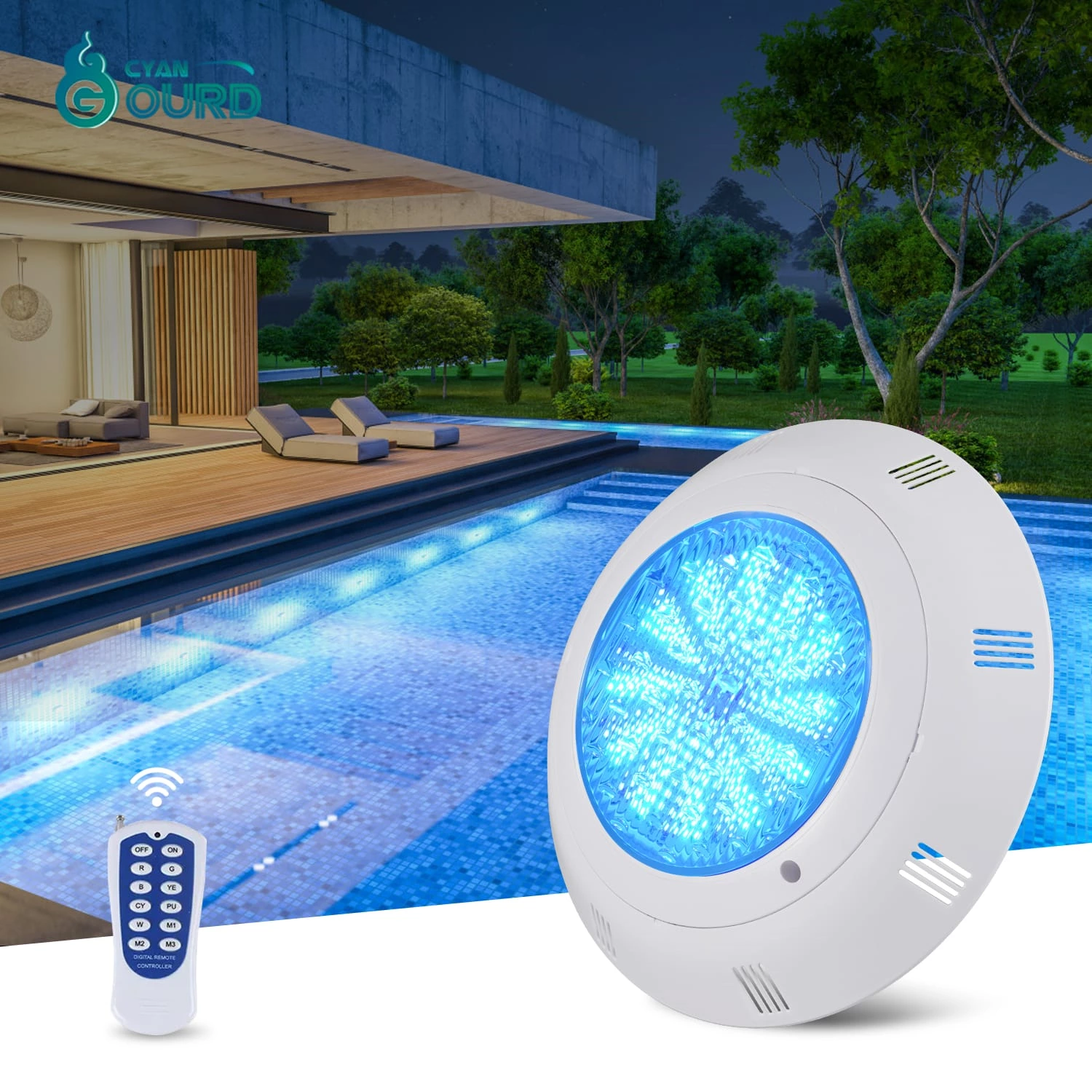
The failure of standard PVC-jacketed cables in saltwater or high-chlorine pools is a recurring issue. For submersion, we specify cables that meet stringent chemical resistance tests. It is essential to use submersible-rated, UV-stabilized jackets that resist molecular breakdown. Our nicheless LED pool lights, such as the QR-55 series, utilize reinforced polycarbonate and high-grade seals designed specifically for direct pool-wall mounting.
Voltage Drop and AWG
Voltage drop is the silent killer of LED luminance uniformity. In a 12V DC system, even a 1V drop can result in a perceptible difference in brightness across an array. For runs exceeding 50 feet, always calculate the AWG based on the cumulative amperage of the entire branch. Use heavy-gauge copper conductors (10 AWG or 12 AWG) for long primary runs and calculate specific voltage drops based on the total load of the chain.
| System Component | Material/Spec Requirement | Industry Standard |
|---|---|---|
| LED Driver | Constant Current (CC) | UL 2108 / IEC 61347 |
| Cable Housing | IP68-rated / Chemical Resistant | IEC 60529 |
| Protection | Secondary side OCPD | NEC Article 680 |
Optimize Your Aquatic Project
Download our comprehensive transformer sizing calculator and technical specification guide for commercial LED integration.
Request Technical Spec SheetCompliance Framework
Navigating NEC Article 680 is mandatory for any US-based commercial aquatic project. Section 680.23 specifically addresses the requirements for underwater luminaires, including the necessity for proper bonding and grounded low-voltage circuits. Furthermore, adherence to IEC 60529 standards for Ingress Protection ensures that your components are rated for continuous submersion at specified depths.
QA Reliability Data
Reliability is built into our production process through rigorous stress testing. Our internal QA logs for the QR-55 series show moisture-ingress failure rates of less than 0.02% over 5,000 hours of continuous submersion. We perform heat dissipation tests by placing sealed enclosures in 50-degree Celsius ambient water baths, ensuring that the SMD 3535 LED arrays maintain their nominal output without triggering thermal protection circuits.
Frequently Asked Questions
Q: How does voltage drop affect long-run cabling?
A: Voltage drop causes lower current delivery, leading to dim or flickering LED lights. In 12V systems, it is critical to size copper conductors based on the total run distance to maintain nominal voltage at the fixture input.
Q: What is the difference between magnetic and electronic transformers?
A: Magnetic transformers are heavier and more robust against surges, whereas electronic transformers are more energy-efficient and compact but require careful load matching with LED drivers.
Q: Are standard landscape transformers suitable for pool lights?
A: No. Standard landscape transformers lack the necessary isolation and pool-specific safety certifications required by NEC Article 680 to prevent electrocution risks in aquatic environments.
Q: How do I calculate total VA for multiple LED zones?
A: Calculate the sum of the wattage for all lights in the zone, add 20% for overhead and safety, and select a transformer with a VA capacity that exceeds this total.
Q: Which cable materials resist pool chemicals best?
A: Use chemical-resistant, marine-grade cable jackets that are explicitly rated for direct submersion in chlorinated or saline environments to prevent degradation of the cable insulation.
Ready for your next aquatic retrofit?
Contact our engineering team to review your schematics and ensure compliance with the latest electrical standards.
Consult an Engineer