Русский
 Français
 بالعربية
 Español
Engineering Precision in Commercial Aquatic Lighting: A Specification Guide for DMX/RDM Synchronization
Specifying color-changing DMX pool lighting for commercial entertainment venues: Successful large-scale installations require strict CIE 1931 color-binning, proprietary thermal management to prevent junction degradation, and verified DMX/RDM integration. Procurement teams must prioritize laboratory-validated burn-in documentation and IP69K compliance to ensure long-term chromaticity consistency in harsh chemical environments.
The Engineering Challenge of Large-Scale Aquatic Lighting Synchronization
Commercial aquatic entertainment venues represent some of the most demanding environments for LED technology. The primary challenge in specifying Led Pool Light systems for such projects is not simply achieving color change, but maintaining synchronization across hundreds of units. As manufacturers, we recognize that latency in signal delivery across a multi-hundred-meter DMX chain can result in noticeable "stutter" during high-speed color chases, ruining the immersive quality of an aquatic show.
Achieving CIE 1931 Chromaticity Consistency in Mass-Production
Color variation between units is the leading cause of rejection in commercial lighting projects. To ensure batch-to-batch uniformity, our production lines utilize strict color-binning protocols. Adherence to the CIE 1931 color space allows us to measure and classify LEDs with precision. For an order of 500+ units, we provide Spectral Power Distribution (SPD) data to verify that every fixture operates within a tightly controlled wavelength tolerance, ensuring that the "deep sea blue" or "vibrant magenta" remains consistent across the entire venue.
Thermal Management: Mitigating LED Junction Stress in High-Intensity Show Environments
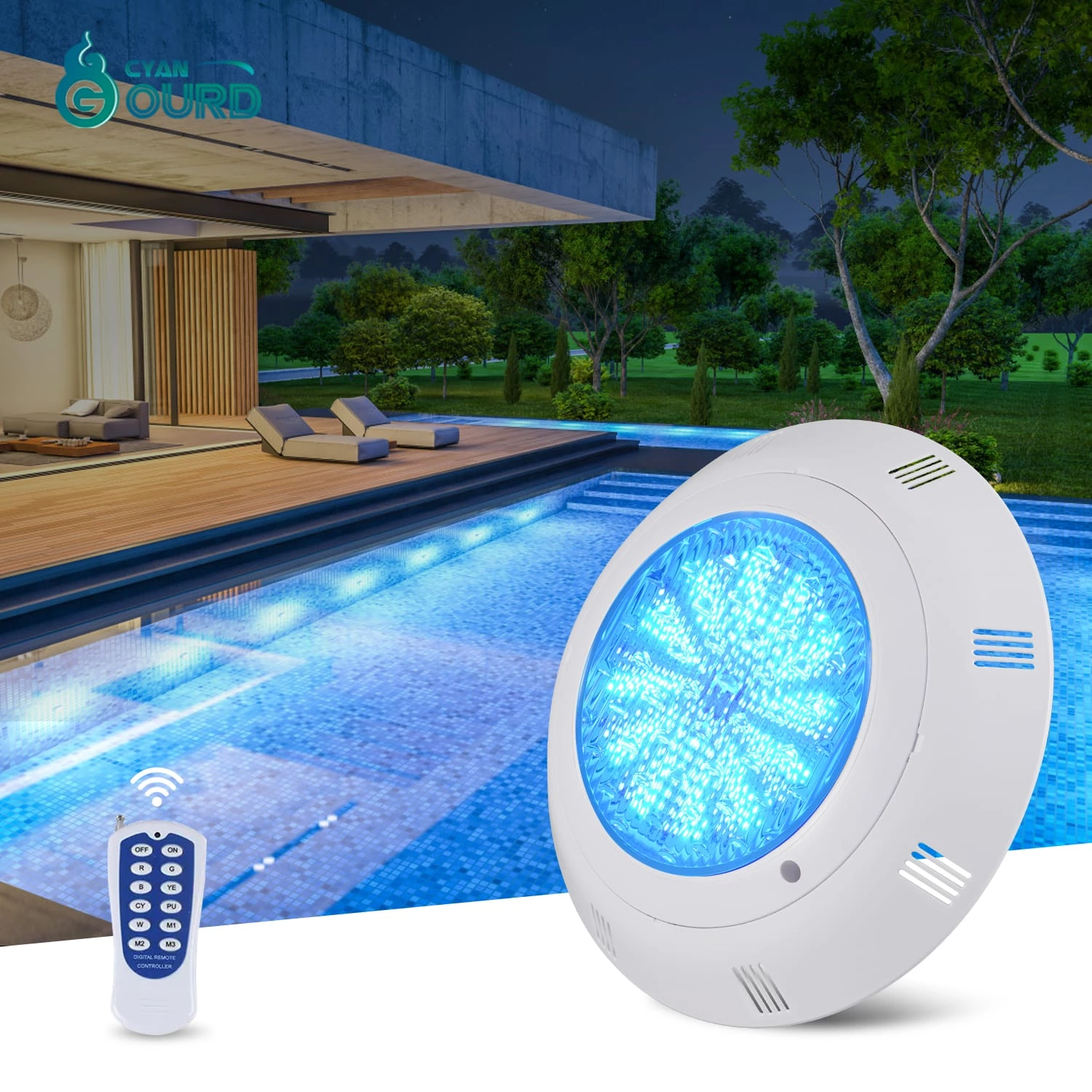
Underwater environments often lack active water circulation, leading to thermal buildup around the fixture housing. Our Stainless Steel Pool Light models utilize advanced thermal-resilient chassis designs, similar in rigorous material engineering to the housing of our JM30356, which manages heat dissipation to prevent junction temperature spikes. By maintaining a stable operating temperature, we prevent the premature phosphor degradation that causes color shifting over time.
Control System Integration: Linking Underwater DMX/RDM Fixtures to Venue Automation
True professional-grade integration requires compliance with international DMX512-A/RDM standards. Our fixtures undergo system integration testing to ensure zero-latency handshake capabilities. During factory audits, we simulate complex DMX chains to verify that address assignment and intensity feedback (RDM) operate without signal drop-off, even when the fixtures are daisy-chained across expansive pools.
Combatting Chemical Degradation: Material Science and Ingress Standards (IP69K)
The chemical composition of pool water, particularly in chlorinated or salt-water entertainment facilities, acts as a solvent for low-grade plastics and seals. We prioritize IP69K-rated ingress protection, which is tested against high-pressure, high-temperature washdowns. This ensures that the internal electronics remain isolated from water ingress, a critical requirement for safety and longevity as defined by IEC 60598-2-18 for underwater luminaires.
Quality Assurance for Procurement: Reviewing Burn-in Reports and Longevity Metrics
When sourcing for hospitality or theme park projects, technical documentation is non-negotiable. Our QA process includes 2,000+ hour burn-in tests in chemical-saturated solutions. We provide specific degradation curves based on these tests, allowing procurement officers to forecast maintenance intervals accurately. Unlike generic commercial fixtures, our units are verified for long-term intensity maintenance, providing the reliable Nicheless Pool Light performance expected in high-traffic venues.
Future-Proofing: Planning for Scalable Maintenance and Replacement Cycles
Scalable maintenance relies on modular design. We recommend that lighting designers account for the 5-7 year replacement cycle of high-intensity underwater LEDs. By utilizing standard RDM-capable drivers, facility managers can replace individual units without re-programming the entire control array, saving substantial time and labor costs over the venue lifecycle.
| Metric | Professional Grade | Standard Retail Grade |
|---|---|---|
| Ingress Protection | IP69K Certified | IP68 Only |
| Color Binning | 3-Step MacAdam | Unregulated |
| DMX Protocol | DMX512-A/RDM | Proprietary RF |
Need Technical Specifications for Your Project?
Request our comprehensive technical spec sheet and factory-validated color-binning calibration data for your venue requirements.
Request DocumentationFrequently Asked Questions
Q: How do LED binning processes ensure consistent color uniformity across multiple pool lights in large venues?
A: We test each LED against the CIE 1931 chromaticity standard, grouping them into narrow tolerance bins to ensure that every fixture in an order produces identical light output.
Q: What are the electrical load requirements for centralized DMX-controlled pool lighting?
A: Systems typically operate on 12V or 24V DC to ensure safety, with DMX signal cabling requiring shielded twisted-pair wire to maintain data integrity over long distances.
Q: How does material composition prevent corrosion in high-chlorine entertainment installations?
A: Our housings use specialized 316L stainless steel and chemical-resistant potting compounds, which resist oxidation and degradation when exposed to constant sanitation chemicals.
Q: What is the required IP rating for underwater lighting in high-traffic pools?
A: We recommend IP69K compliance, which provides superior protection against both high-pressure water jets and continuous submersion, exceeding the baseline requirements of standard IP68 units.
Q: Can color-changing underwater lights be synced with venue-wide music or show automation?
A: Yes, by utilizing DMX512-A/RDM compatible fixtures, your lights can integrate directly with standard venue automation consoles to synchronize with show cues, audio, and motion.
Streamline Your Procurement
Contact our engineering team to discuss integration requirements for your upcoming aquatic entertainment project.
Request a Quote