Русский
 Français
 بالعربية
 Español
Commercial Pool Lighting: A Technical Guide to Certification and Compliance
Commercial pool lighting certification requirements: Achieving compliance for public and resort facilities requires strict adherence to International Waterproof And Safety Pool standards, specifically IEC 60598-2-18 and UL 676. Procurement managers must verify IP68 ingress protection and chemical resistance protocols to mitigate liability and prevent premature system failure.
1. The High Cost of Compliance Failures in Commercial Aquatic Projects
In commercial aquatic environments, lighting is not merely an aesthetic choice; it is a critical safety component. Failures in commercial-grade underwater luminaires often stem from improper sealing or substandard component selection, leading to catastrophic system-wide outages. For hotel resorts and municipal pools, the cost of drainage and scaffolding for maintenance can exceed the initial hardware investment tenfold. Furthermore, using non-compliant Led Pool Light equipment poses significant legal liabilities, particularly regarding IEC 60598-2-18 compliance, which dictates the specific requirements for luminaires intended for use in swimming pools and similar applications.
2. Decoding Safety Standards: Why IP68 Is the Bare Minimum
There is often confusion regarding ingress protection (IP) ratings in the procurement phase. An IPX8 rating merely signifies that the device has been tested for immersion, but it fails to define the duration or specific depth required for commercial safety. In contrast, IP68 testing requires the manufacturer to specify depth and time, confirming the device is suitable for continuous, long-term submersion. Relying on an IPX8 rating for a 3-meter deep pool is a procurement error that frequently leads to moisture ingress over time.
| Feature | IPX8 Rating | IP68 Rating |
|---|---|---|
| Testing Scope | Temporary immersion | Continuous long-term immersion |
| Depth Clarity | Varies by manufacturer | Validated to specific depth (e.g., 3m) |
| Reliability | High risk for commercial use | Standard for public infrastructure |
Need Technical Validation?
Review our full testing logs and download the compliance data sheet for our Resin Filled Pool Light.
Download Spec Sheet3. Beyond the Rating: Chemical Longevity and Resin-Filled Tech
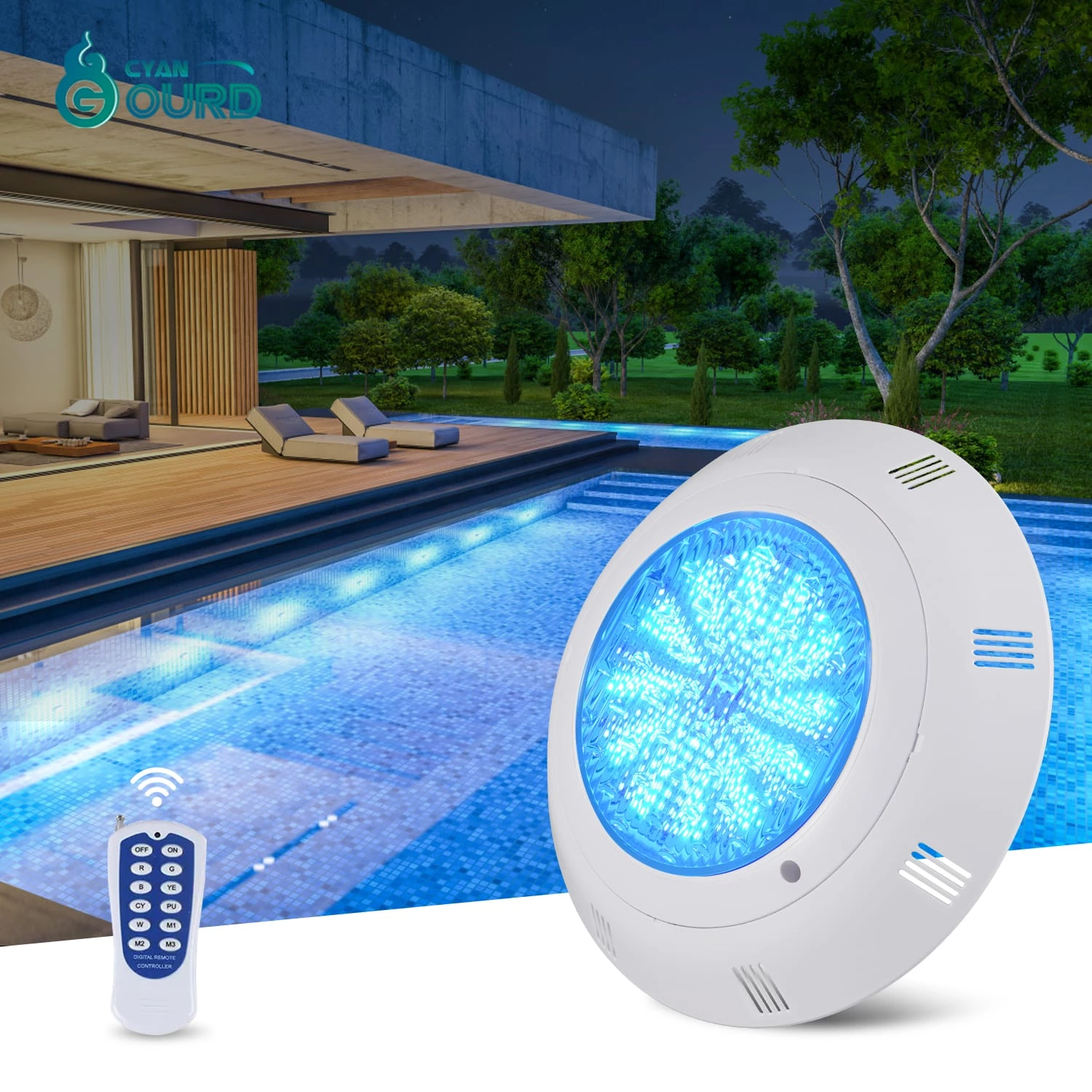
Laboratory testing often utilizes fresh, stagnant water. However, real-world saltwater pools expose components to aggressive chemical corrosion. Our Resin Filled Pool Light, specifically the YC260-2AP model, employs a specialized epoxy-resin housing. Unlike standard vacuum-sealed units that rely on delicate O-rings (prone to degradation in chlorinated or saltwater environments), our resin-filled construction creates a single, monolithic block. This material selection is vital for salt-pool longevity, preventing electrolytic corrosion that destroys traditional stainless steel or ABS housings.
4. Technical Data Sheet Audit: Spotting Red Flags
When vetting a supplier, scrutinize the electrical specifications for voltage drop compensation. For large aquatic installations, long cable runs are inevitable. If the data sheet does not specify an input voltage tolerance (e.g., 12V AC +/- 10%), you risk light flickering or premature driver burnout due to voltage drop. Our Par Pool Light models, such as the P56-A, are engineered with internal thermal management profiles that maintain stable operation even when the thermal conductivity of the surrounding water varies.
5. Navigating Regional Regulatory Codes
Compliance is geography-dependent. In North America, UL 676 is the gold standard for underwater luminaires. In Europe and many international markets, IEC 60598-2-18 provides the safety framework. Procurement managers must demand copies of the Test Reports (CB certificates or UL files) to verify that the product has undergone destructive testing. Never accept a general declaration of conformity without the associated ISO 9001 manufacturing audit documentation.
6. Our Quality Assurance Protocol: Seal Integrity and Electrical Safety
In our production line, we don't rely on random sampling for seal integrity. Every single unit, including the P38-A and YC260-2AP, undergoes a mandatory pressure chamber stress test. We cycle-test units under 0.5 MPa pressure to simulate 5 meters of depth, ensuring zero moisture ingress before shipping. This process insight is what separates OEM-direct factory grade from standard distributor inventory.
7. Procurement Checklist for RFP Vetting
1. Require documented proof of IP68 certification (not just IPX8).
2. Request evidence of chemical exposure testing for resin or housing materials.
3. Verify thermal dissipation data to confirm LED driver longevity in water.
4. Request ISO 9001 certification and redacted testing logs for recent batches.
5. Demand specific electrical wiring diagrams confirming compatibility with existing low-voltage transformer systems.
Frequently Asked Questions
Q: What is the core difference between IPX8 and IP68 testing?
A: IPX8 is a generic label for water resistance that varies by manufacturer parameters, whereas IP68 is a formal standard requiring rigorous depth and long-term submersion testing, making it the required certification for professional commercial pool environments.
Q: Why is resin-filled construction better than sealed glass or metal housings?
A: Resin-filled units like the YC260-2AP eliminate the need for gaskets and O-rings, which are the most common points of failure for water ingress and corrosion in chlorine or salt-heavy commercial pools.
Q: Does my commercial pool lighting need to meet UL 676 or IEC 60598-2-18?
A: This depends on your region. UL 676 is essential for North American safety compliance, while IEC 60598-2-18 is the standard for European and international commercial projects; both are industry benchmarks for safety.
Q: How do I identify a manufacturer that conducts real quality testing?
A: Look for manufacturers that provide redacted internal testing logs showing pressure-chamber cycle data, rather than just basic marketing brochures. Authentic OEMs will always offer technical data on thermal dissipation and voltage compensation.
Q: How can I avoid premature lighting failure in saltwater pools?
A: Prioritize equipment constructed from chemical-resistant resin rather than traditional metals, and ensure your supplier provides documented data on anti-corrosion material testing for the specific chemical concentrations in your facility.
Consult Our Engineering Team
Get detailed performance data or request a sample unit for your lab stress-test.
Request a Sample