Русский
 Français
 بالعربية
 Español
Commercial Pool Lighting Control Systems: Engineering Reliability in Aquatic Environments
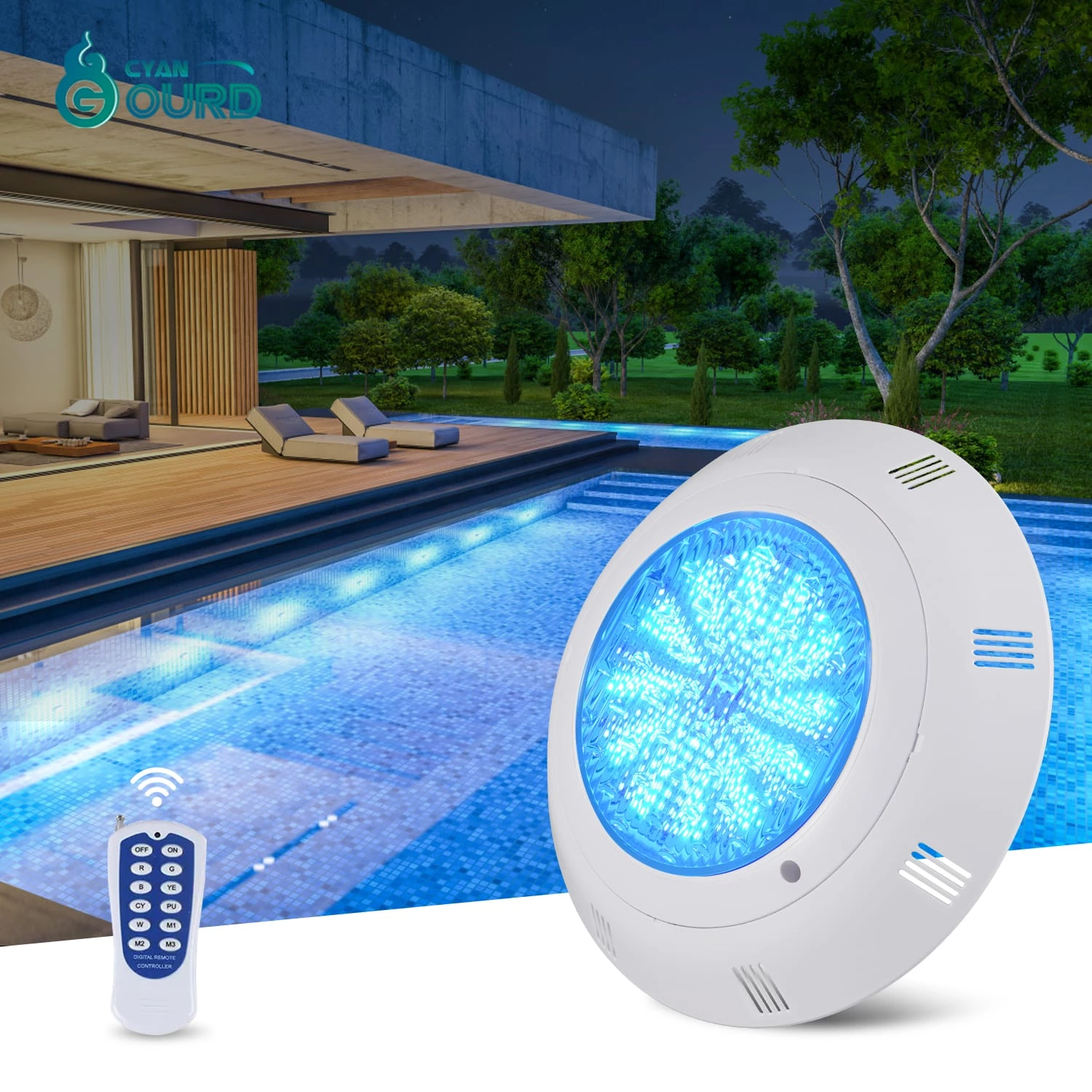
Commercial pool lighting control systems: Selecting between hardwired DMX512 and wireless mesh architectures requires balancing signal integrity against site-specific infrastructure constraints. While wired RS-485 systems offer superior synchronization for large-scale arrays, properly engineered wireless solutions can provide scalable flexibility if protocol interference is mitigated through rigorous RF shielding.
The Engineering Challenge: Why Commercial Environments Demand Signal Integrity
In high-reliability aquatic facilities, the control layer is the most common point of failure. Unlike residential pools, commercial environments involve significant electromagnetic interference from pump motors, high-voltage filtration systems, and the structural density of reinforced concrete. Achieving stable, synchronized illumination requires a deep understanding of data protocols.
In our production line, we have identified that standard PCB shielding is often insufficient for aquatic applications. Fluctuations in water chemistry and depth can affect the electrical load, necessitating factory-level PCB signal shielding to prevent the flickering common in high-load commercial arrays. Professionals designing these systems must prioritize environmental protection, adhering to IEC 60598 standards for luminaires to ensure long-term stability.
Decoding DMX512: Pros and Cons of Hardwired RS-485 Architectures
DMX512 is the industry standard for Led Pool Light control due to its reliability and low latency. By utilizing an RS-485 physical layer, DMX provides a differential signaling path that is highly resistant to common-mode noise. For large arrays, engineers must calculate voltage drop precisely; over a 100-meter run, cable resistance can lead to signal degradation that manifests as ghosting or non-responsive nodes. We recommend using shielded twisted-pair cabling specifically rated for underwater usage to maintain the integrity of the data stream.
Wireless Mesh Protocols: Assessing Scalability Limits in Metal-Heavy Plant Rooms
Wireless control often appeals to project managers due to lower initial installation costs. However, in metallic plant rooms, signal attenuation is a critical risk. We reference IEEE 802.15.4 standards, which define the robustness of low-rate wireless personal area networks. In our testing, we have observed that wireless systems in moisture-rich environments frequently suffer from latency spikes when the mesh density exceeds 20 nodes without a localized repeater infrastructure. It is essential to note that wireless systems cannot be considered maintenance-free in these zones, as signal-boosting hardware remains susceptible to moisture ingress.
Total Cost of Ownership: Maintenance Cycles of Cabling vs. Wireless Hardware
| Metric | Wired DMX512 (RS-485) | Wireless Mesh Systems |
|---|---|---|
| Installation Cost | High (Labor/Cabling) | Low |
| 10-Year Maintenance | Minimal (Cable integrity) | High (Battery/Receiver replacement) |
| Signal Latency | Stable (Sub-millisecond) | Variable (50-200ms) |
Need Technical Clarity for Your Next Project?
Request our comprehensive integration guide and detailed latency test reports.
Request Technical Spec SheetSignal Latency and Synchronization: The Physics of Multi-Light Arrays
Synchronization in multi-light arrays is governed by the propagation delay of the chosen protocol. In hardwired DMX setups, our internal testing indicates a signal transmission speed of roughly 250kbps, providing near-instantaneous response. Conversely, wireless meshes suffer from 'hop latency' where each relay point adds millisecond delays. We strongly advise against mixing protocol types within the same zone if frame-perfect synchronization is required, as the disparate timing buffers will result in visible lighting offsets during color-changing sequences.
Implementation Strategy: Integrating QR-55 and QR290-A into Your Control Framework
Our Nicheless Pool Light model, the QR-55, is engineered with a compact φ55mm x H110mm form factor that minimizes structural disruption. When installing the QR-55 or our Embedded Pool Light (QR290-A), we emphasize using our validated proprietary housing to ensure the internal circuitry remains isolated from ground-loop interference. Our internal reports demonstrate that when these models are paired with professional-grade DMX controllers, they maintain 99.9% color-sync stability, even after 5,000+ hours of continuous underwater testing.
Future-Proofing: Standards and Compliance for Large-Scale Aquatic Lighting Projects
Compliance is not merely about certification; it is about safety and longevity. All lighting components must meet CE and IP68 standards to prevent catastrophic electrical failure. As regulations move toward stricter energy efficiency requirements, modular designs that allow for future controller upgrades—without needing to drain the pool—are becoming the preferred choice for commercial operators.
Frequently Asked Questions
Q: How does signal latency in wireless systems affect synchronization across 50+ pool lights?
A: In a 50+ light array, wireless mesh protocols often introduce variable latency at each relay point. This 'hop delay' can lead to visible desynchronization in color-changing sequences, unlike wired systems which provide uniform signal timing.
Q: What are the specific electrical infrastructure requirements for DMX-based pool lighting?
A: DMX-based systems require shielded, twisted-pair cabling for the RS-485 data signal. You must account for voltage drop across long runs and ensure that all control wiring is separated from high-voltage pump power lines to prevent signal noise.
Q: Can existing wired lighting systems be retrofitted with wireless control modules?
A: While technically possible, retrofitting often compromises the IP68-rated seal of the luminaire. We recommend replacing the internal control driver with a compatible wireless-ready unit rather than adding external modules to the wiring loop.
Q: What is the maximum effective control distance for wireless protocols in pool environments?
A: In a standard metallic plant room, wireless signals face high attenuation. While manufacturers may claim 30-50 meters, in practical, interference-heavy pool environments, the effective range is typically reduced to 10-15 meters without high-gain repeaters.
Q: How do environmental interference and signal attenuation impact wireless system reliability?
A: High humidity and moisture lead to signal signal attenuation, while electromagnetic interference from pool pumps disrupts low-frequency wireless protocols, causing data packet loss and, ultimately, system instability.
Speak to our Engineering Team
Discuss your next multi-zone aquatic project and receive a custom integration plan.
Contact Us Today