Русский
 Français
 بالعربية
 Español
Commercial LED Pool Lighting Systems: A Technical Guide to Longevity and Safety
Commercial LED Pool Lighting Systems: High-performance aquatic illumination requires specialized thermal management and precise voltage drop mitigation to prevent systemic failure. By prioritizing UL 676 compliance and integrated potting technologies, facility managers can ensure long-term lifeguard visibility and reduce maintenance cycles in large-scale municipal or hotel aquatic installations.
The Commercial Reality—Why Residential-Grade Pool Lights Fail in Large Installations
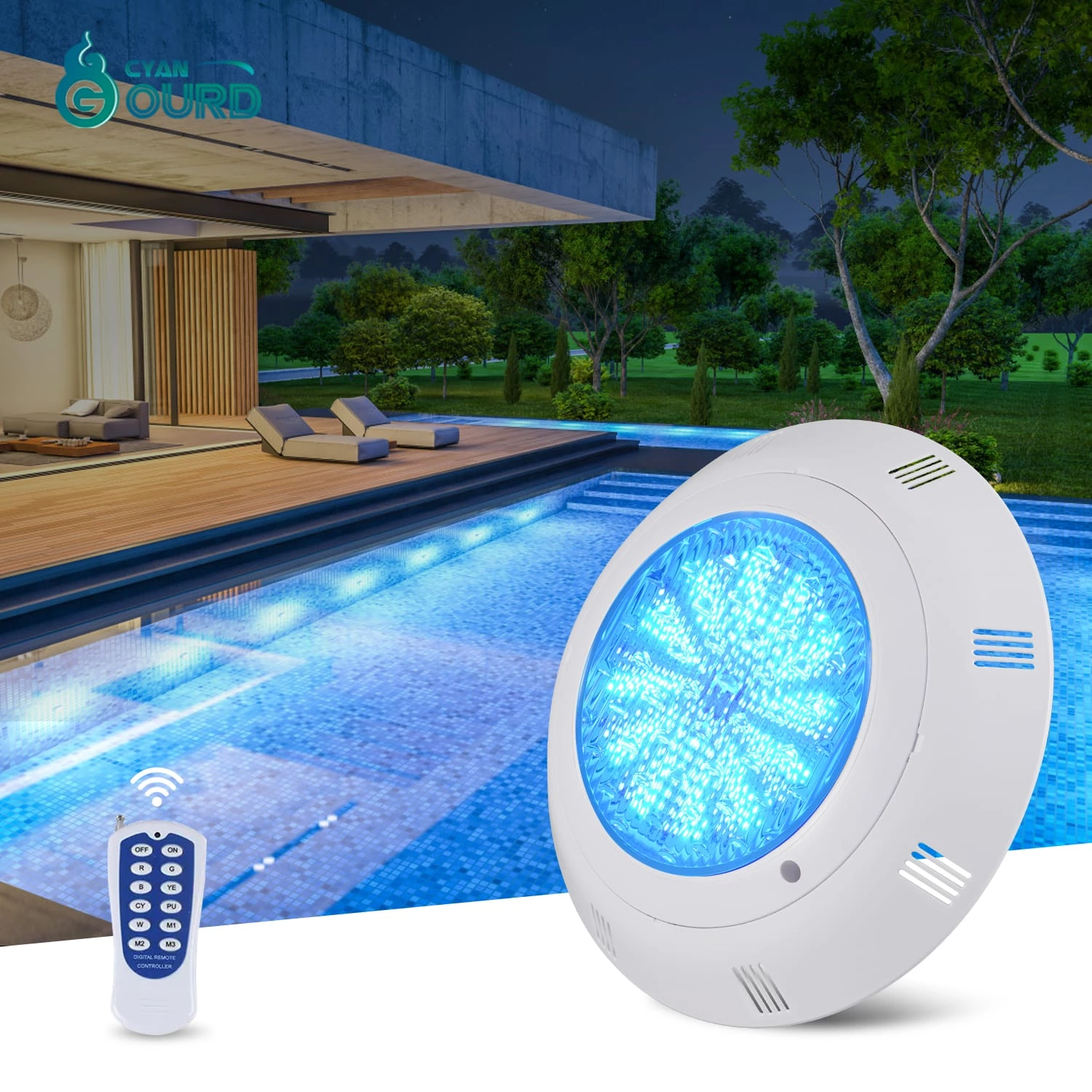
In our experience on large-scale aquatic projects, the most common error is specifying residential-grade lighting for commercial environments. Residential units often rely on passive cooling that is inadequate for the high-duty cycles of public facilities. Frequent fixture failure in these settings is usually a symptom of thermal runaway, where high ambient temperatures in the housing lead to premature LED degradation. Unlike a residential garden pond, a high-traffic municipal pool requires robust hardware. Our Nicheless Pool Light (QR-55 model) is specifically engineered with SMD 3535 LEDs to balance high lumen density with superior thermal dissipation. When sourcing for MEP projects, prioritize luminaires designed for 24/7 reliability rather than consumer-aesthetic appeal.
Engineering for Safety—Defining the Requirements for Lifeguard Visibility
Lifeguard safety is non-negotiable. While residential fixtures prioritize wide, decorative beam angles to create a glow, commercial safety standards demand precision optics. The objective is to minimize surface glare while maximizing illumination depth to reveal objects on the pool floor. Adhering to UL 676 safety compliance for submerged luminaires is mandatory to ensure the electrical integrity of the system. We recommend focusing on narrow-beam intensity, which provides the contrast required to identify hazards in deep-water environments.
Solving Voltage Drop—Technical Guidelines for Large-Scale Wiring
Voltage drop is the silent killer of LED longevity in commercial installations. In a 12V system, a drop of even 1.5V can result in color shifting and flickering, eventually leading to driver failure. When calculating wire runs, project managers must account for total circuit length. For example, a 100m run requires substantially thicker gauge wire compared to a 50m run to maintain a stable input. How Voltage Drop Affects Pool lighting performance is a core calculation every MEP contractor must master. Using high-gauge copper cabling is essential to ensure every fixture in a series receives the required wattage as specified in our QR-55 datasheet.
| Feature | Residential Decorative | Commercial Safety |
|---|---|---|
| Beam Spread | Wide (120°+) | Narrow (30°-60°) |
| Thermal Management | Standard Passive | Heat-Sink Integrated |
| Visibility Focus | Ambient Glow | Depth/Floor Definition |
Need Technical Guidance?
Request our comprehensive engineering spec sheet and batch testing protocols for your next project.
Request Spec SheetMaterial Science—The Role of Potting and Thermal Stability
During our internal production audits, we identified water ingress as the primary point of failure for legacy fixtures. Our solution is a proprietary resin-potting process. By encapsulating the internal driver and connection points, the luminaire remains protected even if the outer lens seal experiences minor compromise. This adds an essential layer of redundancy. Furthermore, the use of high-grade polycarbonate (PC) and ABS housings ensures chemical resistance against harsh chlorine or salt-water treatments prevalent in municipal aquatic facilities.
Testing Standards—Verification Protocols for IP68 Resilience
IP68 is not a permanent state; it is a performance rating that requires rigorous batch testing. Our factory protocols involve 48-hour continuous submersion tests at 3 meters depth for every production lot. We evaluate components against IEC 60598 requirements to ensure seal integrity. Trustworthy manufacturers provide documentation of these tests, not just a label on the box. For procurement managers, verifying the date and duration of these tests is a key step in quality assurance.
ROI Through Reliability—How Proper Sourcing Reduces Long-Term Maintenance Costs
The total cost of ownership (TCO) for a commercial pool light includes labor, drainage, and re-installation. When a cheap, non-commercial light fails, the maintenance cost often exceeds the initial product cost by a factor of ten. By investing in a Led Pool Light that utilizes precision components, facilities can stretch service intervals from 12 months to 5+ years, providing significant ROI for stakeholders.
Frequently Asked Questions
Q: Why is my pool light failing after only a few months of use?
A: Common failure causes include thermal runaway due to inadequate heat dissipation or water ingress from poor seal quality. Using residential units in commercial settings is the primary driver of these failures.
Q: What is the importance of IP68 certification?
A: IP68 indicates the luminaire can withstand continuous submersion. In commercial settings, this rating must be validated through rigorous in-house batch testing to ensure the integrity of seals under pressure.
Q: How does voltage drop affect lighting consistency?
A: Voltage drop across long cable runs leads to reduced brightness and color shifts in LEDs. It can also strain the internal driver, significantly shortening the lifespan of the fixture.
Q: Can I replace individual LEDs in a pool light?
A: Modern commercial pool lights are usually sealed units for safety. We recommend replacing the entire fixture to ensure the factory-tested, IP68-rated seal remains intact, as DIY repairs often compromise safety.
Q: What is the difference between nicheless and standard pool lights?
A: Nicheless lights mount directly to the pool wall, eliminating the need for a recessed housing. This reduces potential leak points and makes installation in large-scale commercial retrofits significantly easier.
Ready to secure your project?
Contact our engineering team to compare models or request a sample for your next aquatic facility installation.
Compare Models